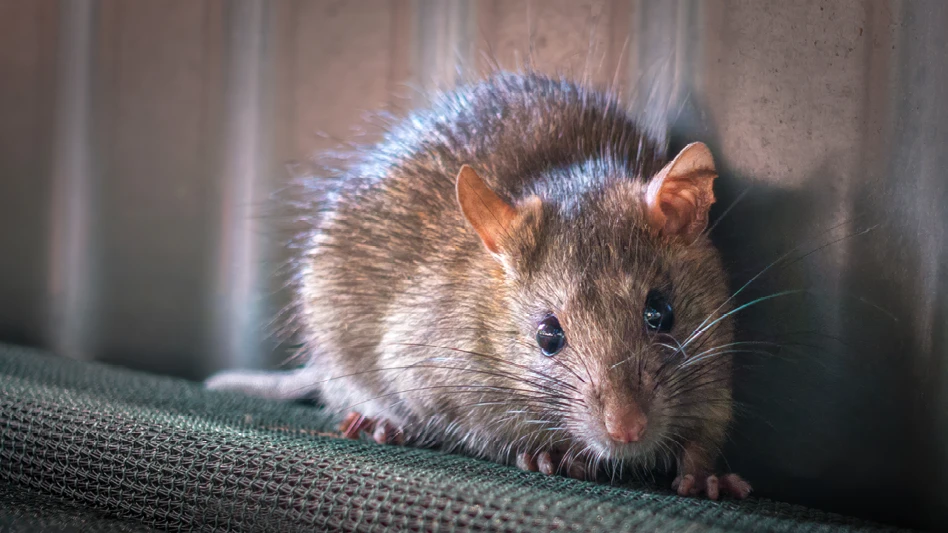
They shimmy through crevices a pencil’s width in diameter and ease into dime-sized holes, thanks to a flexible rib cage, a nondiscriminatory appetite for scrap and an innate nesting habit. Food and beverage processing facilities, by nature, check all the boxes rodents need to thrive — at the expense of food quality and safety.
Not to mention, rodents are operational hazards.
A sighting on an incoming supply trailer prompts a return-to-sender. Their presence in food processing areas causes line shutdowns and lost productivity and revenue. They can damage products in storage, contaminate waste areas and transmit vector-borne diseases.
Perhaps the worst part? “The fact that they exist,” laughed Brooke Rehberg — really, all joking aside.
Rehberg is director of administration and quality assurance at Homeland Bakery and Mitchell’s Sausage Rolls in Claremore, Okla. Since 2022, the facility has expanded from 5,000 to 13,000 square feet.
“We’re launching new products left and right,” she said.
Greater capacity and more product variety can mean diverse exposures to pests if not managed with documented processes, a pest management professional (PMP) partnership and strict in-house controls. Rehberg’s at the helm, overseeing these moving parts.
“In this role, I can actively influence the food safety culture on the floor,” she said, emphasizing an all-in approach to pest management in general, and rodents specifically.
Food safety and quality assurance (FSQA) professionals can prevent and manage rodent pressure, but they’re every bit a part of the food chain — not just the supply chain FSQA managers guard to ensure high-quality, untampered product.

Monitoring and control are essential to manage this perennial pest.
Respondents to QA magazine’s 2025 State of the Rodent Control Market survey identified rodents as a public health and operational offender.
Fifty-four percent said rodents were a “pest of concern,” with 38% ranking them very much a concern. Small flies (47%), stored product pests (39%), cockroaches (37%) and ants (28%) rounded out the pests that cause FSQA professionals to worry.
Respondents rated their level of concern from 1 to 5, or from not really an issue to very much a concern.
WHERE THERE’S ONE.
BHJ North America is a global supplier of animal protein ingredients, mainly for the pet food industry. With nine facilities across the U.S. and Canada, BHJ also has processing facilities across Asia, Europe, North America and South America.
Billie L. Johnson, Ph.D., is food safety and regulatory compliance manager for North America operations.
“All of our facilities are in industrial settings where meat processing occurs,” she said. “Both rodents and flies are attracted to the ‘fresh meat’ smell and find a multitude of nutrient sources in our plants.”
In short, rodents are a potential risk, and BHJ’s robust rodent control and integrated pest management (IPM) programs get to the source and block entry points.

“Rodents can exist in multitudes,” Johnson said of a lesson learned during her more than 25 years in quality assurance. “If we have a mouse sighting, we need to be prepared for more than one.”
An on-guard philosophy and close partnership with pest management provider BHJ yields results, she said. One facility celebrated a year with zero pest sightings, a milestone the company celebrates. Team members are every bit a part of this success.
In the rodent department, Andrew Kuszynski considers Schiff Food Products lucky.
“Rodents rank quite low here,” said the director of continuous improvement of his Totowa, N.J., facility, which specializes in sourcing and manufacturing spices, seeds, herbs, dehydrated vegetables and seasoning blends.
Supplies are sourced from a global market, but rodents have no passport into the facility. This could be because the pests prefer the bakery next door, which moved in 10 years ago and seems to offer more appealing harborage spots and food than the cumin or paprika at Schiff, Kuszynski said.
Still, he said, “Rodents remain a theoretical concern, and we don’t take that lightly.”
Neither do consumers.
PUBLIC EYE.
“People are more cognizant of the ingredients going into their food and where food comes from,” said John Harvey, Orlando-based commercial sales division manager at Truly Nolen, a pest control company based in Tucson, Ariz.
Equally, QA managers and leaders in food and beverage processing facilities are overwhelmingly attuned to audit requirements, IPM strategies and, for some (24%), electronic rodent monitoring.
“QA managers are on top of their game 99% of the time, and they understand the consequences if there is a breach in the facility in terms of rodent pressure and what this means to the operation, customers and general public,” said Harvey.

Explore the July/August 2025 Issue
Check out more from this issue and find your next story to read.
Latest from Quality Assurance & Food Safety
- Ajinomoto Foods Recalls Products Due to Potential Glass Contamination
- Grubhub Introduces Drone-Powered Food Delivery Program
- FSIS Releases 2025 Foodborne Illness Outbreak Investigations Report
- EWG Analysis Flags 111 Ingredients Added to Foods Through GRAS
- FDA Releases Risk Assessment of Foodborne Illness from Produce with Untreated BSAAO
- Catalyst Food Leaders Announces 2026 Virtual Leadership Summit
- FDA to Hold Public Meeting on Dietary Supplements
- USDA Partners with Army Corps on New World Screwworm Sterile Fly Production Facility