Adobe Stock | Dinar Budiman
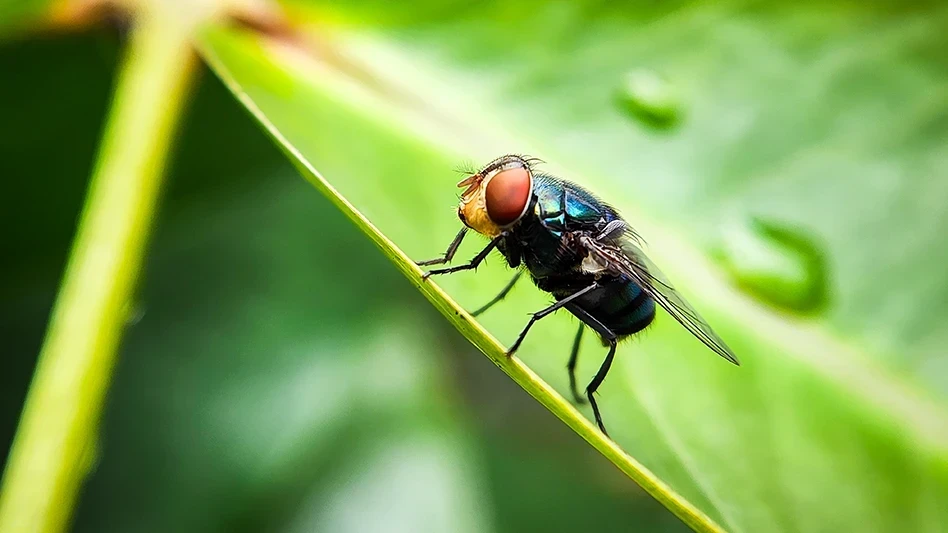
TAMPICO, Mexico — The U.S. Department of Agriculture (USDA) opened a sterile fly dispersal facility in Tampico, Mexico, as it continues its fight against the New World screwworm (NWS), a parasitic fly whose larvae feed on the living flesh of warm-blooded animals.
The Tampico facility will allow USDA to disperse sterile flies aerially across northeastern Mexico, including in Nuevo León, the site of the northernmost detection of NWS, less than 70 miles from the U.S.-Mexico border.
“The opening of the Tampico sterile fly dispersal facility is another incredibly important tool in our arsenal to stop the spread of screwworm,” said U.S. Secretary of Agriculture Brooke Rollins. “The facility will ensure flexibility and responsiveness in northern Mexico, giving us a greater ability to drop sterile flies and continue to push the pest south. Stopping the spread of screwworm is a top priority for the entire Trump administration.
“Last week, I had a productive meeting with Mexican President Claudia Sheinbaum and my counterpart Secretary Julio Berdegue on the joint response to screwworm. We are boosting our efforts and completing a joint review of our screwworm operations in Mexico to ensure our protocols are being followed. As we enter the winter months, we continue to prioritize the response in Mexico and the rest of our five-pronged plan to protect U.S. livestock and the livelihoods of American farmers and ranchers.”
There are two methods of dispersing sterile insects: aerial dispersal and ground release chambers. Aerial operations are preferred because they allow for dispersal at a steady rate through a large area, and sterile insects may be dispersed in areas that are unreachable from the ground, said USDA. Ground release chambers are used when there is a need to quickly deploy sterile insects outside of the dispersal facility range, the agency said.
USDA continues to disperse 100 million sterile flies per week in Mexico, but until now, aerial operations have been limited to southern Mexico, necessitating the use of ground release chambers in more northern areas of the country.
Mexico continues to confirm new cases of NWS. According to the USDA, the majority of these remain in the southern part of the country, with no significant northward expansion over the past several months. Should that change, the Tampico facility will allow USDA to immediately tackle any cases that occur elsewhere in Mexico, the agency said.
The two northernmost detections (approximately 70 and 170 miles from the U.S. border, respectively) occurred in Nuevo León on Sept. 20 and in young cattle transported from Chiapas, Mexico, on Oct. 5. Both cases are now inactive, said USDA, and there have been no additional detections of NWS flies in traps or cases in animals in Nuevo Leon. USDA continues to disperse sterile insects in Nuevo Leon and will transition from ground release chambers to aerial dispersal in those areas.
USDA produces sterile flies for dispersal at the COPEG facility in Panama. USDA is also investing $21 million to support Mexico’s renovation of an existing fruit fly facility in Metapa, which will double NWS production capacity once complete, according to the agency. With support from USDA APHIS technical experts, Mexico anticipates this sterile fly production to begin as soon as summer 2026, said USDA.
To expand the United States’ domestic response capacity, USDA has begun construction on a sterile fly dispersal facility at Moore Air Base in Edinburg, Texas, that is projected to begin operating in early 2026. APHIS is also expediting design and construction of a sterile fly production facility in Southern Texas, with a targeted maximum capacity of 300 million sterile flies per week, said USDA.
Latest from Quality Assurance & Food Safety
- Ajinomoto Foods Recalls Products Due to Potential Glass Contamination
- Grubhub Introduces Drone-Powered Food Delivery Program
- FSIS Releases 2025 Foodborne Illness Outbreak Investigations Report
- EWG Analysis Flags 111 Ingredients Added to Foods Through GRAS
- FDA Releases Risk Assessment of Foodborne Illness from Produce with Untreated BSAAO
- Catalyst Food Leaders Announces 2026 Virtual Leadership Summit
- FDA to Hold Public Meeting on Dietary Supplements
- USDA Partners with Army Corps on New World Screwworm Sterile Fly Production Facility