Photo courtesy Institute of Industrial Science, the University of Tokyo
TOKYO — Across the world, the demand for meat is growing, despite associated environmental and animal welfare costs. Although lab-grown — or cultured — meat could be part of the answer, scientists are still perfecting one crucial detail: the taste.
In an article to be published in Food Chemistry, researchers from the Institute of Industrial Science, The University of Tokyo, have measured and found a way to control the key amino acids responsible for flavor in a step toward making cultured meat taste like the real thing.
The push toward cultured meat has been adopted because conventional production is not a sustainable solution for tackling growing demand. To create the best cultured meat, it is essential to understand the flavor compounds that can make conventional meat delicious.
"We know that free amino acids strongly influence the flavor of traditional meat, and their levels generally increase during the aging process," said lead author Mai Furuhashi. "However, we noticed that the role of free amino acids in the flavor perception of cultured meat has received little research attention."
Amino acids can be used to build proteins, but when amino acids are instead in their free form, they contribute to meat's flavor: glutamic acid imparts umami, for example, while alanine is sweet. The researchers aimed to further clarify amino acids' role in the flavor of cultured meat.
Cultured Meat Study Details.
The team first obtained muscle cells from conventional meat, which were then grown in a nutrient bath. The cells then underwent cell differentiation to grow a fiber-like structure like the tissues in conventional meat. Some samples were then collected to be aged, while others were not.
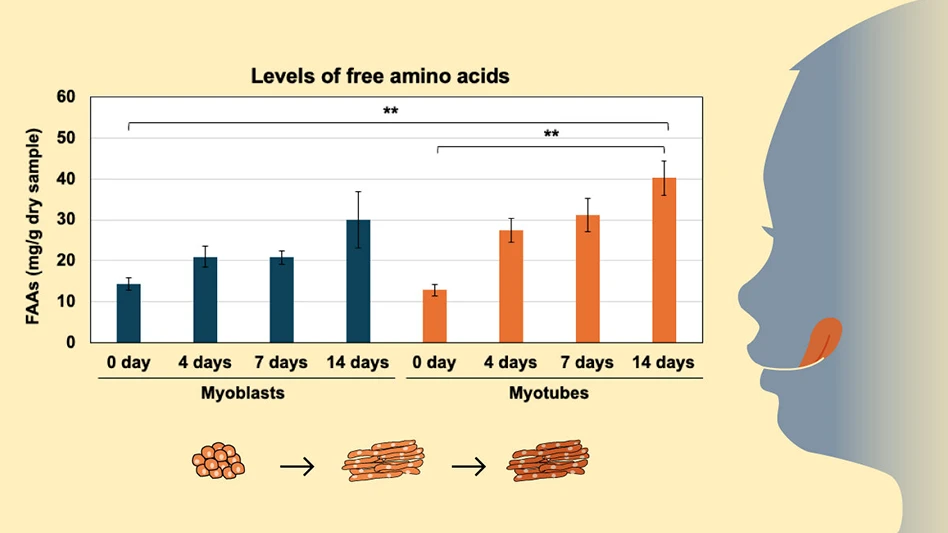
Liquid chromatography was used to identify and quantify free amino acids in the aged and non-aged cultured meat cells. The researchers found that the levels of free amino acids increased significantly during the aging of bovine cells, with some notable differences compared with conventional meat.
"The levels of free amino acids decreased during differentiation but increased during aging,” said senior author Shoji Takeuchi. "The surprise was that the levels of free amino acids in cultured muscle cells were actually double those in conventional beef."
Glutamic acid was the most prominent amino acid in cultured muscle cells, followed by aspartic acid, which may suggest it has a strong umami flavor. Conventional beef was sweeter, with high amounts of alanine.
The amount of free amino acids located in the culture medium influenced the intracellular free amino acids, which also influenced the flavor compounds of cultured meat.
"Increasing levels of a particular amino acid in the medium increased the levels in the cells," said Takeuchi. "This is exciting because it means we should be able to control the flavor profile of cultured meat."
Latest from Quality Assurance & Food Safety
- New Strain, More Illnesses Reported in Moringa Leaf Powder Salmonella Outbreak
- Kiwa ASI Expands Canadian Presence with Addition of TSLC
- Samples Collected by FDA Test Positive for C. Botulinum in ByHeart Infant Formula Investigation
- FDA Releases Total Diet Study Interface
- Wisconsin Cheese Makers Association Offers Student Scholarships
- Mandy Sedlak of Ecolab on Building a Career in Food Safety and What’s Next for the Industry
- Kroger Shares 2026 Food Trend Predictions
- USDA Announces New World Screwworm Grand Challenge