Stop Foodborne Illness
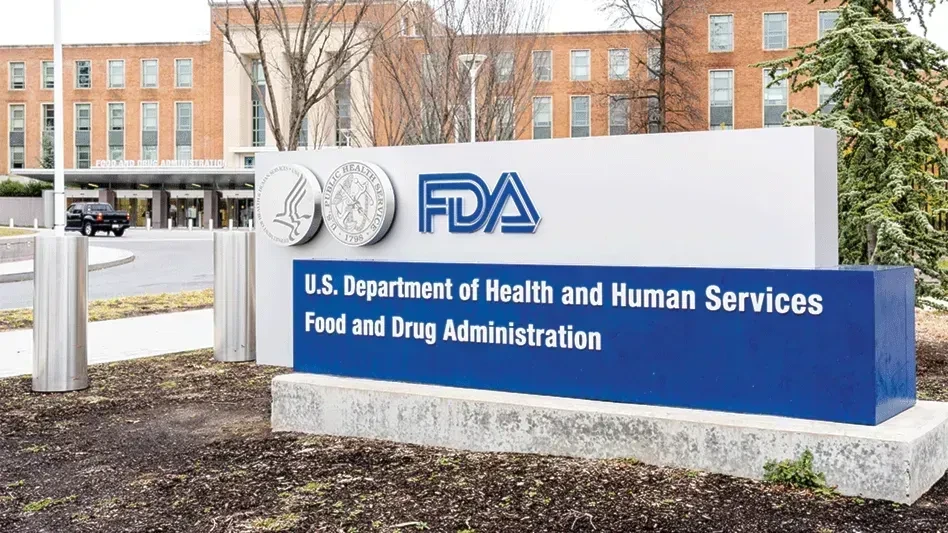
Stop Foodborne Illness has submitted a petition to the U.S. Food and Drug Administration (FDA) urging the agency to adopt a policy of publicly disclosing the names of all companies associated with foodborne illness outbreaks.
The petition, submitted Feb. 5, asks the FDA to change its interpretation that a company name is confidential commercial information and allow disclosure of the name of a company linked to a foodborne illness outbreak, even if there is no related recall.
Currently, the FDA may withhold the identity of a company from disclosure when it determines the company name to be “confidential commercial information” (CCI). Stop Foodborne Illness argues in its petition that this interpretation is inconsistent with applicable statutory language and case law and asserts that FDA can easily change its position through an agency statement or memorandum announcing a change in its interpretation of the Trade Secrets Act.
If the agency decides to continue to treat a company name as CCI, the petition asks that FDA still disclose the names of all companies linked to an outbreak, “based either on its responsibility to ensure safe food under the Federal Food, Drug, and Cosmetic Act (FDCA) or by revising the language of 21 C.F.R. §20.91 to allow broader disclosure of the brand name of any company linked to the outbreak.”
“Such action is consistent with FDA’s mission to protect public health, and with this Administration’s commitment to ‘radical transparency,’” the petition states.
Petition Basis.
In the petition, Stop Foodborne Illness cited the estimated 48 million people in the U.S. — one in six Americans — that are sickened with foodborne illness annually. Each year, 128,000 are hospitalized, and 3,000 die due to foodborne illness, according to the CDC.
Stop Foodborne Illness shared the example of a 2024 outbreak of E. coli in romaine lettuce, which sickened 89 people across 15 states and resulted in one reported death. Contaminated romaine lettuce was served at schools, restaurants and catered events or purchased at retail.
FDA posted the case count and likely source of the outbreak on its outbreak table on Dec. 4, 2024, but it did not include the name of the company that sold the lettuce to consumers, putting consumers at risk if implicated product was still in their refrigerators, said Stop Foodborne Illness.
Although a supplier was never implicated by FDA in the 2024 outbreak, food safety law firm Marler Clark took its own action, filing multiple lawsuits against supplier Taylor Farms in connection to the outbreak on behalf of two children and one adult woman who suffered acute kidney failure due to E. coli O157:H7 after consuming Taylor Farms romaine lettuce. Taylor Farms denied allegations it was linked to the outbreak.
Interpreting CCI.
Stop Foodborne Illness asserts in the petition that a company name is not commercial or confidential.
The organization cites Exemption 4 of the Freedom of Information Act, which states that an agency must first demonstrate that withheld information is “commercial or financial” in nature to be considered CCI.
Stop Foodborne Illness cited a recent decision, Citizens for Responsibility and Ethics in Washington v. U.S. Department of Justice, when the court determined that a company name is not commercial or financial “in and of itself.” The court ruled that the exemption protects only information that reveals basic commercial operations, such as sales statistics, profits and losses and inventories, or relates to the income-producing aspects of a business.
The court in this case also rejected the argument that a contractor’s name could be withheld merely because disclosure might result in reputational damage or economic consequences, said Stop Foodborne Illness.
“This decision makes clear that the name of a company that sells a product linked to a foodborne illness outbreak is not ‘commercial or financial’ information under any reasonable reading of FOIA (and therefore, arguably, similar language in the Trade Secrets Act); it is not like confidential business strategies, proprietary processes, financial data or any other competitively sensitive material,” reads the petition. “Rather, it is a factual identifier of an entity that sells food products to consumers and markets its food products based on its name.”
A company linked to a foodborne illness outbreak operates in public-facing, highly regulated sectors where its role in the supply chain is widely known and often promoted through advertising or readily discoverable through public sources, argued Stop Foodborne Illness.
“Unlike trade secrets, pricing models, or proprietary formulas, the basic fact of who sells a food product is not ‘known only to a limited few’ or ‘intended to be held in confidence or kept secret,’” the petition reads.
Read the Full Petition.
The petition is signed by Stop Foodborne Illness CEO Sandra Eskin, former U.S. Department of Agriculture deputy under secretary.
Read the full petition here.
Latest from Quality Assurance & Food Safety
- Thrive Market Adds Alpha-Gal Filter
- State Agriculture Departments Ask USDA to Allow Local Meat Processors to Access Additional Markets
- Perten Opens Process NIR Center of Excellence in Stockholm
- FDA Launches Reassessment of Food Preservative BHA
- Tyler Williams of ASI Talks Closing Gaps in Food Safety Training
- IAFP 2026 Registration Now Open
- NASDA Sets Federal Policy Focus for 2026
- Eagle Product Inspection Highlights Pack 430 PRO