Courtesy HHS
WASHINGTON, D.C. — U.S. Department of Health and Human Services (HHS) Secretary Robert F. Kennedy Jr. and U.S. Department of Agriculture (USDA) Secretary Brooke Rollins released the Dietary Guidelines for Americans, 2025–2030, marking a significant reset of federal nutrition policy.
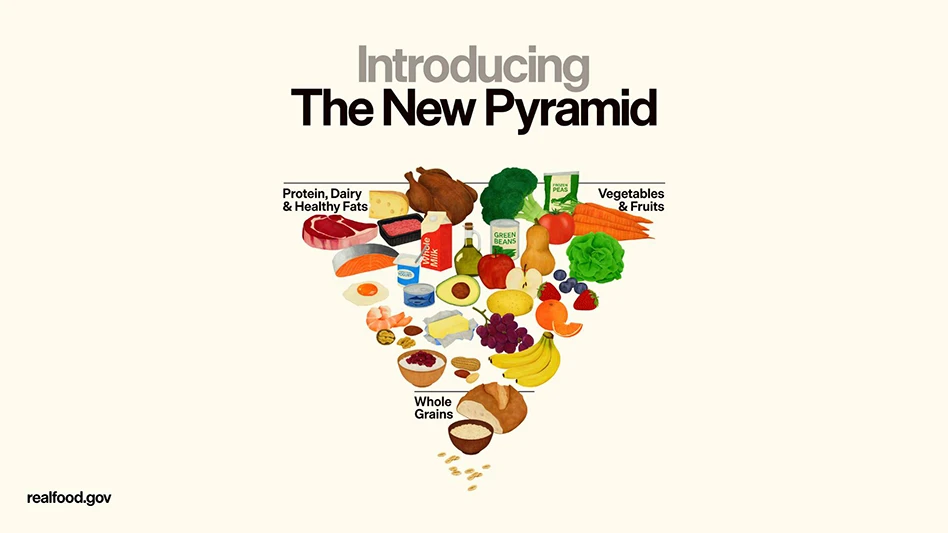
The new guidelines were developed around a central message: “Eat real food.” They introduce a new inverted food pyramid, which places protein, dairy, healthy fats, vegetables and fruits at the top, moving away from the USDA’s MyPlate, launched in 2011 as a visual reminder for consumers to choose a variety of foods throughout the day.
New guidelines emphasize the following:
- Prioritize protein at every meal
- Consume full-fat dairy with no added sugars
- Eat vegetables and fruits throughout the day, focusing on whole forms
- Incorporate healthy fats from whole foods such as meats, seafood, eggs, nuts, seeds, olives and avocados
- Focus on whole grains, while sharply reducing refined carbohydrates
- Limit highly processed foods, added sugars and artificial additives
- Eat the right amount for you, based on age, sex, size and activity level
- Choose water and unsweetened beverages to support hydration
- Limit alcohol consumption for better overall health
The guidelines also provide recommendations for infants and children, adolescents, pregnant and lactating women, older adults, individuals with chronic disease and vegetarians and vegans.
According to a Jan. 7 statement, the administration feels the U.S. faces a national health emergency. Nearly 90% of health care spending goes toward treating chronic disease, much of it linked to diet and lifestyle, the USDA said in the release, linking to CDC data. More than 70% of American adults are overweight or obese, according to 2017-2018 data from the CDC, and nearly 1 in 3 adolescents has prediabetes, according to 2023 data from the agency. Diet-driven chronic disease now disqualifies many young Americans from military service, according to the CDC, threatening national readiness and limiting opportunity.
The 2025–2030 Guidelines reestablish food — not pharmaceuticals — as the foundation of health and reclaim the food pyramid as a tool for nourishment and education, the USDA said in its release.
“These guidelines return us to the basics,” Kennedy said. “American households must prioritize whole, nutrient-dense foods — protein, dairy, vegetables, fruits, healthy fats and whole grains — and dramatically reduce highly processed foods. This is how we make America healthy again.”
Rollins added, “Thanks to the bold leadership of President Trump, this edition of the Dietary Guidelines for Americans will reset federal nutrition policy, putting our families and children first as we move towards a healthier nation. At long last, we are realigning our food system to support American farmers, ranchers and companies that grow and produce real food. Farmers and ranchers are at the forefront of the solution, and that means more protein, dairy, vegetables, fruits, healthy fats and whole grains on American dinner tables.”
Latest from Quality Assurance & Food Safety
- FDA Releases Produce Regulatory Program Standards
- Invest in People or Risk the System: Darin Detwiler and Catalyst Food Leaders on Building Real Food Safety Culture
- USDA Proposes Increasing Poultry, Pork Line Speeds
- FDA Releases New Traceability Rule Guidance
- TraceGains and iFoodDS Extend Strategic Alliance
- bioMérieux Launches New Platform for Spoiler Risk Management
- SafetyChain Receives SOC 2 Type 2 Certification
- Puratos Acquires Pennsylvania-Based Vör Foods