Photo courtesy IDFA
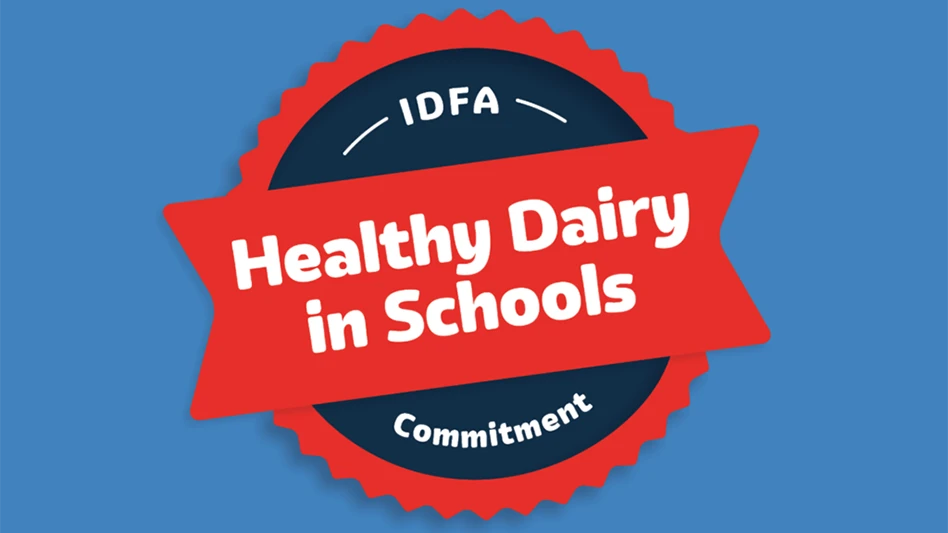
WASHINGTON, D.C. — The International Dairy Foods Association (IDFA) announced the IDFA Healthy Dairy in Schools Commitment, a voluntary pledge to eliminate the use of certified artificial colors in milk, cheese and yogurt products sold to K-12 schools for the National School Lunch and Breakfast Programs by the start of the 2026-2027 school year, or July 2026.
The goal of the commitment is to eliminate the use of Red 3, Red 40, Green 3, Blue 1, Blue 2, Yellow 5 and Yellow 6 in any milk, cheese and/or yogurt products sold to K-12 schools for reimbursable school meals by July 2026.
Today, the vast majority of dairy products sold to schools do not contain any certified artificial colors, as most dairy processors have chosen not to use or decided to remove or replace these ingredients in the past, said IDFA. Moving forward, all companies supporting the Healthy Dairy in Schools Commitment have pledged to discontinue products containing certified artificial colors or to reformulate products with natural ingredients, joining the majority of companies that will continue making products for schools without certified artificial colors, said the association.
“The Healthy Dairy in Schools Commitment goes above and beyond state and federal regulations to help ensure children in grades K-12 continue to have access to the milk, cheese and yogurt options they enjoy without any certified artificial colors,” said Michael Dykes, D.V.M., IDFA president and CEO. “Dairy products in school meals including milk, cheese and yogurt play a critical role in meeting child nutrition requirements by providing 13 essential nutrients students need for healthy growth and development. Milk is the top source of calcium, potassium, phosphorus and vitamin D in kids ages 2-18. Cheese provides a high-quality source of protein, calcium, phosphorous and vitamin A. Yogurt is a nutrient-dense food that is a good source of protein, calcium, riboflavin, vitamin B12 and phosphorous that may reduce the risk of type-2 diabetes. The Healthy Dairy in Schools Commitment further demonstrates our industry’s longstanding promise to provide healthy, nutritious dairy options to school kids everywhere.”
While the U.S. Food and Drug Administration (FDA) has deemed certified artificial colors safe for use in foods when used in accordance with FDA regulations, the federal government is considering how to phase out the use of these ingredients in the U.S. food supply. At the same time, five states — Arizona, California, Utah, Virginia and West Virginia — have already passed laws banning their use in foods sold to schools, and others are likely to follow suit, said IDFA, signifying a new attitude by states to go beyond federal regulators.
In this evolving policy environment, the Healthy Dairy in Schools Commitment will ensure nutrient-rich dairy options remain available to students across the country regardless of changing state regulations, said the association. The commitment does not apply to foods that fall outside of reimbursable school meals.
To learn more about the Healthy Dairy in Schools Commitment, visit www.healthydairyinschools.org.
Latest from Quality Assurance & Food Safety
- FDA Releases Produce Regulatory Program Standards
- Invest in People or Risk the System: Darin Detwiler and Catalyst Food Leaders on Building Real Food Safety Culture
- USDA Proposes Increasing Poultry, Pork Line Speeds
- FDA Releases New Traceability Rule Guidance
- TraceGains and iFoodDS Extend Strategic Alliance
- bioMérieux Launches New Platform for Spoiler Risk Management
- SafetyChain Receives SOC 2 Type 2 Certification
- Puratos Acquires Pennsylvania-Based Vör Foods