Adobe Stock | Dinar Budiman
The U.S. Department of Health and Human Services (HHS) reported Monday the first human case of the flesh-eating parasite New World screwworm (NWS) has been detected in the United States, NBC News reported.
The case, involving a person who recently traveled to El Salvador, was confirmed to be NWS by the Centers for Disease Control and Prevention (CDC) and the Maryland Department of Health Aug. 4, according to the report.
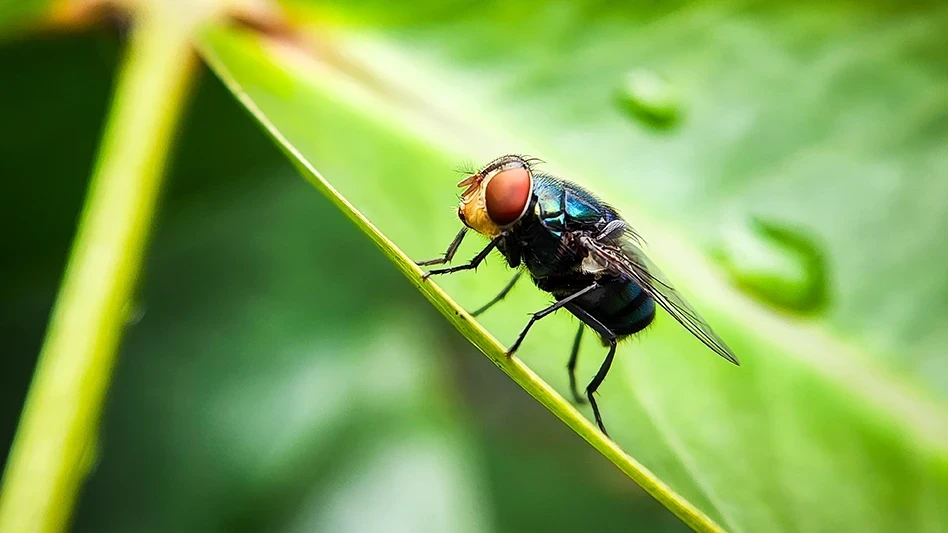
The parasite — the larvae of the New World screwworm fly — can devastate cattle herds and is rife in parts of Mexico and Central America. It can destroy wildlife and even kill household pets. NWS threatens over $100 billion in U.S. economic activity tied to the cattle and livestock industry, according to the U.S. Department of Agriculture (USDA).
When NWS fly larvae (maggots) burrow into the flesh of a living animal, they cause serious, often deadly damage to the animal. NWS can infest livestock, pets, wildlife, occasionally birds, and in rare cases, people. It is not only a threat to the ranching community, but a threat to the U.S. food supply and national security, said the USDA.
The agency recently announced construction of a sterile fly production facility in Texas near the Mexico border to combat the pest's spread. The announcement builds upon USDA’s plan, issued in June, to combat the northward spread of NWS from Mexico into the U.S.
The new facility will be constructed at Moore Air Force Base in Edinburg, Texas, which USDA described as an ideal location due to existing infrastructure and proximity to the U.S.-Mexico border. Built with the Army Corps of Engineers, the facility will produce up to 300 million sterile flies per week to combat NWS, said USDA. This will be the only U.S.-based sterile fly facility and will work in tandem with facilities in Panama and Mexico to help eradicate the pest and protect American agriculture, said the agency.
Follow QA's coverage of NWS here.
Latest from Quality Assurance & Food Safety
- USDA Opens Sterile Fly Dispersal Facility in Texas
- USDA FSIS Establishes Consumer Safety Inspector Training Leader Position
- Cameron Prince Breaks Down Canada’s Food Safety Landscape Amid Trade Tensions
- Barry Callebaut Opens Global Innovation Center in Singapore
- AFDO Opens Registration for 2026 Annual Educational Conference
- IFT Webinar to Examine the Impact of GLP-1s on Product Design and Development
- SQF Institute Announces Excellence Awards Finalists
- WorkForge Expands Food Safety Training Platform