weerapatkiatdumrong | iStockPhoto
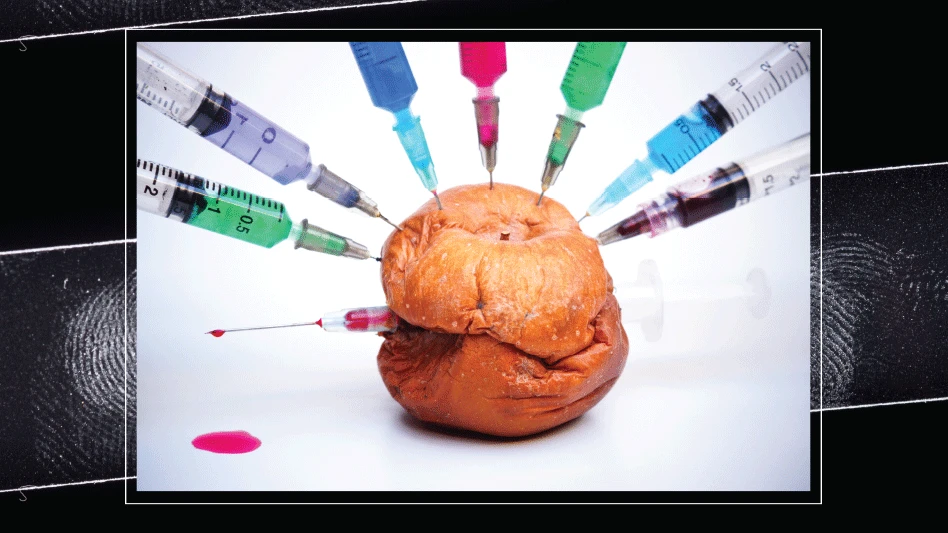
Parents must have become quite angry when they learned their children had been exposed to lead and chromium in cinnamon applesauce following a 2023 investigation. The cinnamon added to the product was apparently intentionally adulterated by a single cinnamon processor that added lead chromate for economic reasons.
Historically, lead chromate was illegally added to certain spices for increased weight and color enhancement, which increases the monetary value. In the case of the applesauce, state and local health departments reported to CDC 519 cases of lead and chromium exposure in children in 44 states. While the health effects of eating food contaminated with chromium, as a constituent of lead chromate, are not well understood, exposure to lead can seriously harm a child’s health, including causing damage to the brain and nervous system and slowing growth and development.
Cases like this can have a huge negative impact on consumers’ trust in the food industry and regulatory authorities. Industry and government food safety and quality professionals dedicate their work to assuring food is safe, honestly represented and consistent in quality.
Combating food fraud is complex and not always easy to address. Food fraud issues can be well hidden, exist at any point in the food chain and be concealed in newspaper ads or restaurant menus.
The Consumer Brands Association (CBA) estimates that food fraud costs the global industry $30 to $40 billion every year; approximately 10% of commercially manufactured food products are compromised by fraud, which affects chocolate, baby formula and other foods. According to CBA, the dollar amount is even higher when additional costs, such as the health of consumers and damage to brand reputation, are factored in.
Food fraud is generally motivated by profit, but there are some types of food fraud that can pose a direct threat to the health of consumers. It can be challenging to detect food fraud, since those committing the fraud are
usually innovative in avoiding detection. Here are eight types of food fraud.
1. ADULTERATION WITH CHEMICALS.
The addition of harmful chemicals to food products such as artificial colors, preservatives and chemical additives can enhance the appearance, taste and shelf life of food items.
For example, synthetic dyes may be added to spices, sweets and beverages to improve their visual appeal.
Adding formalin to fruits, vegetables and fish for preservation purposes or adding urea to rice and puffed wheat for whitening purposes are other examples of adding chemicals that can cause serious health problems such as kidney damage, cancer and even death.
Adding artificial colors to food products such as spices, sweets and snacks can make them look more attractive, but these colors can cause allergies, hyperactivity and other health problems.
Lead-based dyes may be used to give spices a certain color, especially when the color strongly influences the perception of quality. These and other industrial dyes can cause adverse health problems such as cancer and have been found in spices such as chili powder, turmeric and cumin.
2. ADULTERATION WITH SUBSTANDARD INGREDIENTS.
Substandard ingredients may be used to reduce production costs and increase profits.
Examples include milk diluted with water or adulterated with synthetic milk-like substances, such as urea or detergent powder, as well as milk from cows and other animals watered down or laced with powders to increase creaminess.
Edible oils are prone to adulteration by adding cheaper oils or mixing them with non-edible substances like mineral oil, which can lead to adverse health effects.
Juices may be diluted with water or adulterated with sugars, pulp wash or other additives to increase yield and profit. There is also risk of juice-to-juice adulteration — the undeclared addition of a juice of lesser value to a product (e.g., deionized grape juice flavored with a more expensive juice and sold as the more expensive juice).
Substitutes such as corn syrup, sugar syrup, glucose, fructose and beet sugar may be used to dilute premium honey and maple syrup products.
3. SUBSTITUTION.
Sometimes, high-value ingredients are replaced with inferior alternatives.
For example, high-value species such as cod, halibut, sea bass, snapper, sole and tuna are substituted with cheaper alternatives. A recent DNA-based study by marine charity Oceana found widespread seafood fraud in Canada. Almost 50% of samples taken from supermarkets and restaurants were mislabeled, including incidents where tuna was replaced with escolar, a fish that can cause serious gastrointestinal illness.
Substitution of species in domesticated and game animal ground meat and substitution of pork rectum for squid in calamari are other examples of this form of food fraud, as well as beef products substituted with horse or kangaroo meat and surimi-based products sold as lobster or crab meat. There is even a legend that sometimes skate fish (a member of the ray family) wings were punched out with a cookie cutter device and passed as bay scallops.
4. MISLABELING OR MISREPRESENTING.
Incorrect or misleading information on food labels or otherwise misrepresenting food products for financial gain is another form of food fraud. This practice misleads consumers about the quality, origin or composition of the product.
Examples include misrepresenting a food product’s country of origin, quality grades or kosher or halal certification.
Low-quality coffee may be passed off as product from a coveted growing region such as Costa Rica or Guatemala. Tea can be cut with dried leaves, twigs and even sawdust. Shrimp may be overglazed to misrepresent product weight.
Mislabeling concerns include fraudulent organic labeling (as organic products are usually priced higher than their non-organic counterparts, since they’re more expensive to produce) and fraudulent labeling claims pertaining to GMOs, wild-caught, free-range, and farm-raised products, nutritional values and other specific product assertions. Olive oil may be mislabeled as extra virgin olive oil; wines may be labeled with the incorrect vintage or area of origin. Covering expiration dates on packaged foods is another form of mislabeling.
5. ADULTERATION WITH CONTAMINANTS.
Food products can be contaminated with harmful substances during production, processing or storage.
Contaminants like heavy metals, mycotoxins and microbial pathogens can find their way into various food items. For instance, seafood may contain high levels of mercury. Whole grains can be contaminated with aflatoxins, which may have detrimental effects on human health, including organ damage, cancer and foodborne illnesses.
In 2008, adulteration with contaminants made the news when it was found that dairy manufacturers were adding melamine (a synthetic chemical often used in plastics that has a high nitrogen content) to milk products, sickening about 300,000 infants and children and killing six.
6. QUALITY CONCEALMENT.
Quality concealment involves deceitful techniques used to conceal the low quality of an ingredient or product.
Examples include poultry injected with antibiotics to mask disease and reduce bacterial load during quality testing or the addition of preservatives, beef hearts or blood to ground beef to maintain a reddish, fresh-appearing product. Coloring agents may be used to enhance the appearance of inferior fruit and vegetables, and deceptive forms of packages may enhance the color or appearance of products packaged.
7. INTENTIONAL FOOD FRAUD ADULTERATION.
This is the purposeful addition of undesired substances or fillers with a similar appearance to make a product heavier or larger overall.
Chalk powder, mud, sand, pebbles, stone and tainted water can be used to increase the weight of products.
Coffee is a popular and valuable product often subject to food fraud with cheaper ingredients, such as corn, soybeans or twigs. In 2016, cellulose, a wood-based filler, was detected in grated Parmesan cheese.
Imported aquaculture-grown prawns were found to have been injected with a jelly-like substance to increase the water content. The injection was carried out after harvest by some traders in the supply chain.
8. WASTE DISPOSAL FRAUD.
Waste disposal fraud has likely happened for decades, but we are now more aware of the practice and risks involved.
Food companies contract with waste companies to securely destroy and dispose of goods that do not meet quality or safety parameters so they cannot be diverted back to consumers. When fraud occurs, the waste company sells the substandard food or otherwise allows it to return to consumers.
In one reported example, damaged jars of food were diverted back to the marketplace by the contracted waste company, which had issued a disposal certificate to the brand owner and promised to destroy the product.
COMBATTING FOOD FRAUD.
These food fraud episodes and examples illustrate the risk they can present to public health, as well as the considerable loss of consumer trust in the food industry and government regulatory agencies.
While instances of food fraud will continue to occur within our increasingly complex food supply chain, there have been great advances made to address the problem with industry and government intervention efforts. Fortunately, our testing and surveillance capabilities have been enhanced by upgraded laws and regulations, new and advanced technology and the improvements made in our food testing labs.
Improved federal and state statutes and regulations have provided regulatory agencies with greater enforcement powers to deal with food adulteration. The Food Safety Modernization Act (FSMA), signed into law in 2011, overhauled regulations regarding food production and gave the FDA more authority to oversee and enforce supply chains. It also enabled the FDA to better protect public health by strengthening the food safety system through coordinated food safety and protection efforts with state and local regulatory partners. This led to the advancement of the Integrated Food Safety System (IFSS), which has improved communication and information sharing between government partners, a benefit in addressing food fraud matters.
FSMA also led to specific systems-based regulations that translate the act into specific actions at each point in the global supply chain to reduce contamination and make it easier to implement changes. These regulations include Preventive Controls for Human Food, Preventive Controls for Animal Food, Produce Safety, Foreign Supplier Verification Program, Third-Party Certification and Food Defense (intentional adulteration).
RECOMMENDATIONS FOR CONSUMERS.
It may be difficult or impossible for consumers to detect food fraud at supermarkets and restaurants. However, fraud awareness can empower consumers to identify the red flags learned from history. Understanding the tactics used by fraudsters can also keep consumers from becoming scam victims. Raising awareness about various types of fraud can provide consumers with the know-how to identify, prevent and report fraudulent activities.
There is always more knowledge needed, and we should be mindful of other industries where food fraud has occurred. These areas include animal feed, advertisements (newspaper, internet, TV), dietary supplements, health claims and nutritional claims.
RECOMMENDATIONS FOR INDUSTRY.
While those who commit food fraud do not necessarily intend to cause illness or death, they do not always understand the potential harmful effects of the adulterating material. Melamine adulteration, for instance, is an example where the perpetrators might have lacked awareness of the potential consequences. Traditional food safety risks associated with food fraud where the adulterant has the potential to cause illness or death are the most obvious public health impact concerns.
There are considerations that industry can make when determining whether a likely food safety risk is associated with food fraud. Industry professionals can conduct a vulnerability assessment, for example, and collect data along the food supply chain identifying potential areas of vulnerability, including raw materials, ingredients, products and packaging. Then, they can implement control measures to reduce risk and to determine when, where and how to address fraudulent activities.
Like any management system, a food fraud management system should be a continuous process, since changes occur over time that may affect the vulnerabilities. Blockchain technology is a preventive means to address both intentional and unintentional food adulteration. Blockchain technology offers accountability to the food industry and the consumer by providing a system of checks and balances throughout the supply chain, which allows for greater and quicker responses to food threats.
RECOMMENDATIONS FOR REGULATORY AGENCIES.
With the advancement of the Integrated Food Safety System (IFSS), federal, state and local regulatory agencies can now utilize the many tools and mechanisms that have been developed. These are listed on FDA’s IFSS website.
The coordination of government resources, including animal and food protection, public health and laboratories, enrich our abilities to address food fraud both internationally and domestically.
Just like Dr. Harvey Wiley in days past (who began researching the adulteration of food in the late 1880s), today’s pioneers and crusaders against food fraud will demand a means to protect the global food supply from food fraud. These individuals from government, industry, academia and consumer organizations recognize that prevention rather than reaction is the appropriate approach to food fraud, and they’ll greatly influence food fraud prevention.
For example, at the Food Fraud Academy and the Food Fraud Think Tank at Michigan State University, there are free online courses, professional education events and other resources associated with food fraud.
Food safety stakeholders are now in a decent position to develop, control and enforce measures against food fraud and end the greed of those who choose to take advantage.
References:
1. US Food & Drug Administration, Economically Motivated Adulteration (Food Fraud). https://www.fda.gov/food/compliance-enforcement-food/economically-motivated-adulteration-food-fraud'
2. National Library of Medicine, Mechanisms and Health Aspects of Food Adulteration: A Comprehensive Review, published online 2023 Jan 2. https://www.ncbi.nlm.nih.gov/pmc/articles/PMC9818512/
3. 5 Biggest Food Fraud Cases Ever Pulled Off, Ideagen. https://www.ideagen.com/thought-leadership/blog/the-5-biggest-food-fraud-cases-ever-pulled-off
4. “The History of a Food Crime Against the Food Law,” Harvey W. Wiley, M.D., 1929.
5. Deborah Blum, “The Poison Squad: One Chemist’s Single-Minded Crusade for Food Safety at the Turn of the Twentieth Century,” Penguin, 2018.
6. Food Fraud Intention, Detection and Management, Food & Agriculture Organization of the United States, 2021. https://www.fao.org/3/cb2863en/cb2863en.pdf
7. “A Complete Guide to Food Fraud & Foodomics.” https://www.labmate-online.com/news/mass-spectrometry-and-spectroscopy/41/breaking-news/a-complete-guide-to-food-fraud foodomics/58289#.YuRdrlAZoC8.twitter
8. CBS News Health Watch, Alexander Tin, 12/2/2023, “Recalled Applesauce Pouches Now Linked to More Than 200 Lead Poisoning Cases in 33 States, CDC Says.” https://www.cbsnews.com/news/recalled-applesauce-pouches-cinnamon-lead-poisoning-cases-states-cdc/
9. “The 19th-Century Swill Milk Scandal That Poisoned Infants with Whiskey Runoff,” Tyler Moss,12/27/2017. https://www.atlasobscura.com/articles/swill-milk-scandal-new-york-city
10. “Swill milk scandal in New York." https://en.wikipedia.org/wiki/Swill_milk_scandal
11. “Food Fraud: Addressing an Emerging Threat to Consumer Trust,” Melissa J. Mayer, 7/16/2015. https://www.thermofisher.com/blog/food/food-fraud-addressing-an-emerging-threat-to-consumer-trust/
12. United States Army Beef Scandal. https://en.wikipedia.org/wiki/United_States_Army_beef_scandal
13. Australian Meat Substitution Scandal. https://en.wikipedia.org/wiki/Australian_meat_substitution_scandal
14. UPI Archives, 9/4/81, Australia's Bogus Beef Scandal Deepened Today with the Disclosure.
https://www.upi.com/Archives/1981/09/04/Australias-bogus-beef-scandal-deepened-today-with-the-disclosure/3188368424000/
5. PubMed Agromedicine, 2013, “Aldicarb: A Case Series of Watermelon-borne Carbamate Toxicity,” Joseph P D'Haenens, Kimberly W McDonald, Ricky L Langley, Sheila A Higgins, Rick Scott, Patrick N Farquhar, William J Meggs. https://pubmed.ncbi.nlm.nih.gov/23540307/
16. UPI Archives, 8/20/1991, “Nine to be tried for 1986 'Wine Massacre' Deaths. https://www.upi.com/Archives/1991/08/20/Nine-to-be-tried-for-1986-Wine-Massacre-deaths/8327682660800
17. Unbelievable Facts, Rishika Jain, “10 Shocking Food Scandals that Dominated Headlines." https://unbelievable-facts.com/2022/01/shocking-food-scandals.html/2
18. American College of Veterinary Pathologists, “Melamine Factsheet.” https://www.acvp.org/page/Melamine
19. New Zealand Honey Co., 10/15/2021, “Fake Honey: What You Need to Know about Counterfeit Honey (And How to Avoid Buying It).” https://newzealandhoneyco.com/blogs/honey-articles/fake-manuka-honey-what-you-need-to-know
20. Eater News, Dana Hatic, 2/16/2016, “That Shredded Parmesan in Your Fridge Might Actually Be Wood, Says FDA.” https://www.eater.com/2016/2/16/11020988/parmesan-cheese-fraud-wood-cellulose
21. The New York Times, Eduardo Medina, 12/4/2023, “68,000 Gallons of Unfit Olive Oil Seized by Italy and Spain.” https://www.nytimes.com/2023/12/04/world/europe/olive-oil-fraud-italy-spain.html#:~:text=Law%20enforcement%20agencies%20in%20Spain,%2C%E2%80%9D%20officials%20said%20on%20Monday
22. Michigan State University, Institute for Food Laws and Regulations, “Jamaican Ginger Paralysis,” Neal Fortin, September 28, 2020. https://www.canr.msu.edu/news/jamaican-ginger-paralysis
23. U.S. Pharmacopeia Convention, Food Safety and Integrity Solutions, “Food Fraud Mitigation Guidance,” Appendix XVII, General Tests and Assays. www.foodfraud.org
24. Food and Drug Law Institute (FDLI), Carissa Cruse, "Food Fraud and the Food, Drug, and Cosmetic Act: Bridging a Disconnect." https://www.fdli.org
25. Food Fraud Prevention Academy, John W. Spink, Ph.D., Director, Food Fraud Prevention Think Tank LLC,
and Assistant Professor, Michigan State University. https://foodfraudpreventionthinktank.com/contact-us
Explore the May/June 2025 Issue
Check out more from this issue and find your next story to read.
Latest from Quality Assurance & Food Safety
- Ajinomoto Foods Recalls Products Due to Potential Glass Contamination
- Grubhub Introduces Drone-Powered Food Delivery Program
- FSIS Releases 2025 Foodborne Illness Outbreak Investigations Report
- EWG Analysis Flags 111 Ingredients Added to Foods Through GRAS
- FDA Releases Risk Assessment of Foodborne Illness from Produce with Untreated BSAAO
- Catalyst Food Leaders Announces 2026 Virtual Leadership Summit
- FDA to Hold Public Meeting on Dietary Supplements
- USDA Partners with Army Corps on New World Screwworm Sterile Fly Production Facility