WSDA
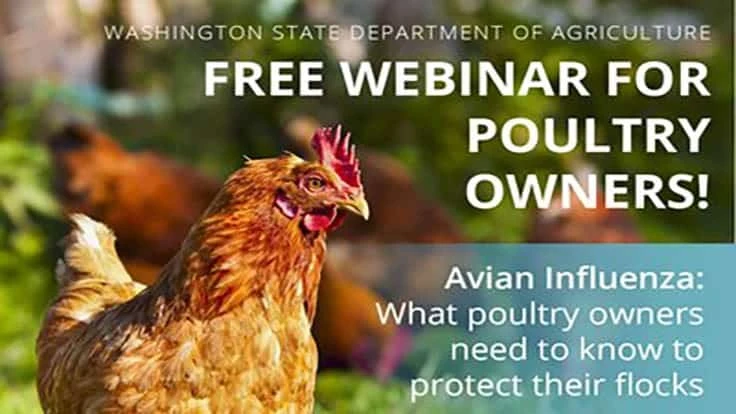
OLYMPIA, Was. – The Washington State Department of Agriculture (WSDA) will offer a free webinar to help poultry owners protect their birds from avian influenza as cases continue to increase worldwide.
The World Organisation for Animal Health (OIE) reports ongoing outbreaks of highly pathogenic avian influenza (HPAI), or bird flu, in 26 countries across Asia, Europe and the Middle East. HPAI can spread rapidly and kill entire flocks.
The USDA Animal and Plant Health Inspection Service recently reported the current rates of HPAI in Asia and Europe are similar to the rates in 2014-2015, when HPAI was identified in the U.S., including Washington State, and thousands of birds had to be euthanized to contain the disease. This pattern suggests the risk of HPAI in the U.S. is elevated this year.
“This is definitely a situation where an ounce of prevention is worth a pound of cure — maybe more,” Dr. Brian Joseph, Washington State veterinarian, said. “By taking steps now, you can protect not only your flock but others in your community.”
In addition to existing resources such as USDA’s Defend the Flock program and information about avian influenza on WSDA’s website, WSDA will offer a free educational webinar on Feb. 23 at 6:30 p.m. for poultry owners. The webinar will provide information about avian influenza, how the current situation is similar to 2014-2015 and what steps poultry owners can take to protect their birds.
Latest from Quality Assurance & Food Safety
- Director General of IICA and Senior USDA Officials Meet to Advance Shared Agenda
- EFSA and FAO Sign Memorandum of Understanding
- Ben Miller Breaks Down Federal Cuts, State Bans and Traceability Delays
- Michigan Officials Warn Recalled ByHeart Infant Formula Remains on Store Shelves
- Puratos USA to Launch First Professional Chocolate Product with Cultured Cocoa
- National Restaurant Association Announces Federal Policy Priorities
- USDA Offloads Washington Buildings in Reorganization Effort
- IDFA Promotes Andrew Jerome to VP of Strategic Communications and Executive Director of Foundation