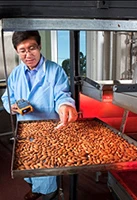
Giving almonds a burst of infrared heat followed by a stint of hot-air roasting—a process called "SIRHA," short for "sequential infrared and hot air"—helps make sure these tasty, healthful nuts remain safe to eat, according to studies by Agricultural Research Service (ARS) engineer Zhongli Pan and ARS microbiologist Maria T. Brandl. Findings from their laboratory experiments show that this chemical-free process offers a simple, safe, energy-efficient and environmentally friendly way to reduce Salmonella enterica populations to levels generally recognized as safe. All almonds processed for sale in the United States today are treated with some kind of pasteurization process in order to zap Salmonella, even though it's generally thought that almonds are only rarely contaminated with this pathogen. Nearly a half-dozen almond pasteurization methods already have federal approval, but many almond processors remain eager to learn about new options, including SIRHA and its promise of fast, reliable and relatively economical pasteurization.
Click here to read more.
Latest from Quality Assurance & Food Safety
- Director General of IICA and Senior USDA Officials Meet to Advance Shared Agenda
- EFSA and FAO Sign Memorandum of Understanding
- Ben Miller Breaks Down Federal Cuts, State Bans and Traceability Delays
- Michigan Officials Warn Recalled ByHeart Infant Formula Remains on Store Shelves
- Puratos USA to Launch First Professional Chocolate Product with Cultured Cocoa
- National Restaurant Association Announces Federal Policy Priorities
- USDA Offloads Washington Buildings in Reorganization Effort
- IDFA Promotes Andrew Jerome to VP of Strategic Communications and Executive Director of Foundation