University of Georgia (UGA) Food Scientist Xiangyu Deng has created a system that can identify foodborne pathogens in a fraction of the time taken by traditional methods. Currently, detecting and subtyping the pathogen are separate processes, but Deng has combined these two steps through a process called “metagenomics analysis.”
“To prevent a pathogen from spreading, you have to first identify it by studying its DNA signatures. Sometimes you only have a few cells of the pathogen in a food sample, just a tiny fraction of the resident microbial populations on the food,” said Deng, an assistant professor of food microbiology at the UGA Center for Food Safety in Griffin. “You could sequence the entire sample (of food) to identify the pathogen inside it, but that would not give you enough pathogen DNA signal for identification.” So, traditionally, the pathogen is separated from the food sample by growing the pathogen in bacterial cultures, which takes 24 to 48 hours, he said.
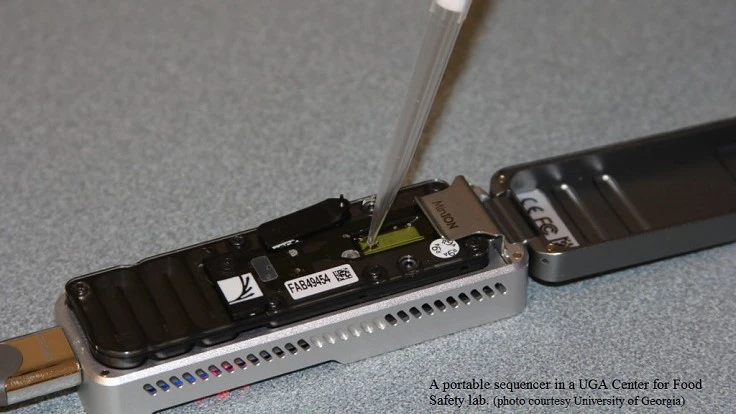
To shorten the culture process, researchers in Deng’s lab apply tiny magnetic beads coated with antibodies that pull the pathogen cells out. Then they amplify the DNA of the captured pathogen cells so they have enough DNA to sequence. “Using a new, very small sequencing tool that’s about the size of a USB drive, we can sequence while capturing the data in real time,” Deng said.
Compared to the mainstream genome sequencer that produces sequencing data after running for a day or two, the small sequencer generates enough data for pathogen detection and subtyping in about an hour and a half, he said.
Deng tested the process on raw chicken breast, lettuce and black peppercorn samples treated with Salmonella and retail chicken parts that were naturally contaminated with different serotypes of Salmonella. In one case, a small amount of Salmonella was detected and subtyped from lettuce samples within 24 hours – which would take two weeks using standard methods.
Deng’s work was featured in the February issue of Applied and Environmental Microbiology.
To learn more about UGA’s food safety center, visit www.ugacfs.org.
Latest from Quality Assurance & Food Safety
- Director General of IICA and Senior USDA Officials Meet to Advance Shared Agenda
- EFSA and FAO Sign Memorandum of Understanding
- Ben Miller Breaks Down Federal Cuts, State Bans and Traceability Delays
- Michigan Officials Warn Recalled ByHeart Infant Formula Remains on Store Shelves
- Puratos USA to Launch First Professional Chocolate Product with Cultured Cocoa
- National Restaurant Association Announces Federal Policy Priorities
- USDA Offloads Washington Buildings in Reorganization Effort
- IDFA Promotes Andrew Jerome to VP of Strategic Communications and Executive Director of Foundation