Mauck Lab BSF Team/UCR
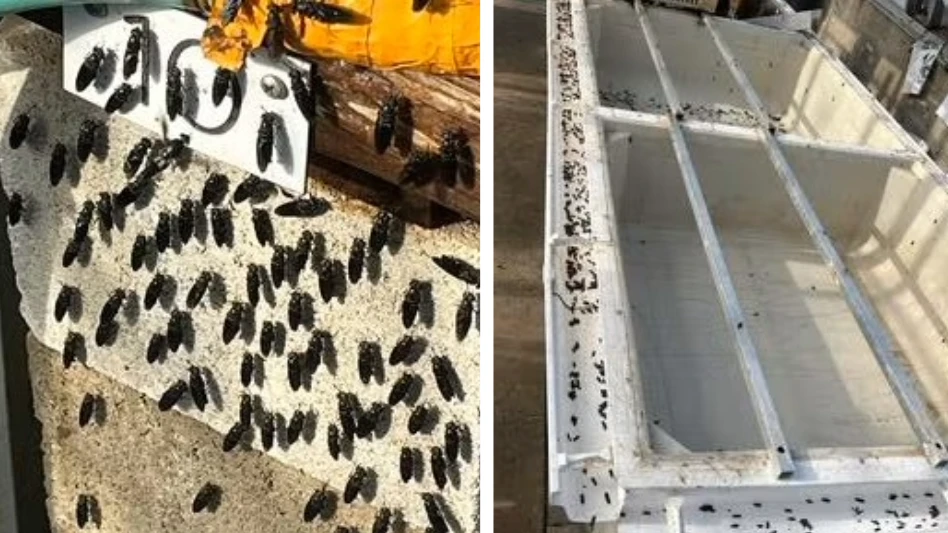
RIVERSIDE, Calif. – University of California, Riverside, scientists have created a small-scale system that transforms food waste into high-protein animal feed and fertilizer using black soldier flies.
Black soldier flies have long been used by cities and industry to break down food scraps and agricultural waste. Compared to industrial-scale operations, the DIY system is more affordable and accessible, said UC Riverside.
“A commercial facility might process tons of food waste a day, but that comes with big capital and labor costs,” said Kerry Mauck, UCR entomologist who helped design and test the system. “Our system can be built with off-the-shelf materials, maintained by one person, and still produce useful products that can help grow more food.”
A paper co-authored by Mauck describing the bioreactor system and its effectiveness as a food transformation tool has been published in the journal Waste Management.
“This setup lets you recycle food waste right where it’s produced, either on a farm, in a greenhouse, or even at a large residence,” Mauck said. “We ran ours using food waste from a campus dining hall.”
The research team found that with basic oversight, the system becomes remarkably stable, producing about a pound of larvae per square yard every day, said UC Riverside.
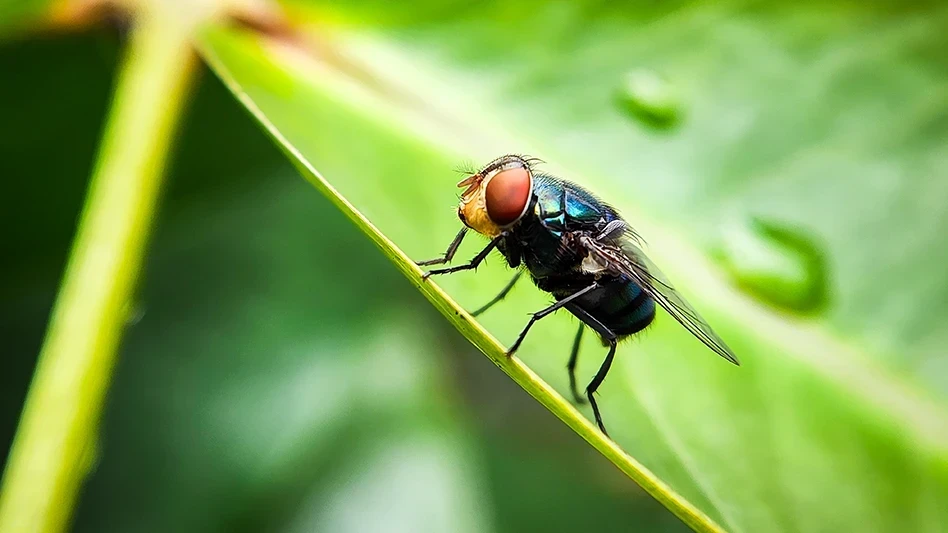
Black soldier fly larvae are sought after as protein-rich feed for poultry and fish. Their manure, called frass, is a valuable soil amendment. Unlike house flies, which transmit disease and are a nuisance, black soldier flies are harmless and uninterested in human environments, according to UC Riverside.
The bioreactor’s primary output is frass, which is produced in even greater quantities than the larvae themselves. But frass offers more than nutrients. UC Riverside said that insect body parts mixed in from molting stimulate natural plant defenses and improve soil microbial health.
“There’s a lot we’re still learning about how frass boosts plant immunity,” Mauck said. “We’re seeing that when insect fragments are part of the soil, it helps plants resist disease, almost like a vaccine.”
Climate control is key to keeping the bioreactor running smoothly. Researchers found that larvae need a shaded or greenhouse space that stays below 100 degrees Fahrenheit. During rearing, users occasionally add water and wood chips, and monitor basic metrics like temperature and pH, then adjust as needed.
“One of our big takeaways was that monitoring pH really matters,” Mauck said. “If the system gets too wet, anaerobic bacteria can take over, dropping the pH and harming the larvae. But small tweaks, like less water or more wood chips, can quickly bring things back into balance.”
By mimicking natural cycles where insects feed and die in soil, the bioreactor reconnects farming with the ecosystems it often disrupts. For farms seeking to reduce waste and input costs, the insect-powered solution offers both ecological and economic benefits, said UC Riverside.
“This isn’t just waste management, it’s resource creation,” Mauck said. “We’re taking what we don’t want and turning it into something we do.”
Latest from Quality Assurance & Food Safety
- FDA Releases Produce Regulatory Program Standards
- Invest in People or Risk the System: Darin Detwiler and Catalyst Food Leaders on Building Real Food Safety Culture
- USDA Proposes Increasing Poultry, Pork Line Speeds
- FDA Releases New Traceability Rule Guidance
- TraceGains and iFoodDS Extend Strategic Alliance
- bioMérieux Launches New Platform for Spoiler Risk Management
- SafetyChain Receives SOC 2 Type 2 Certification
- Puratos Acquires Pennsylvania-Based Vör Foods