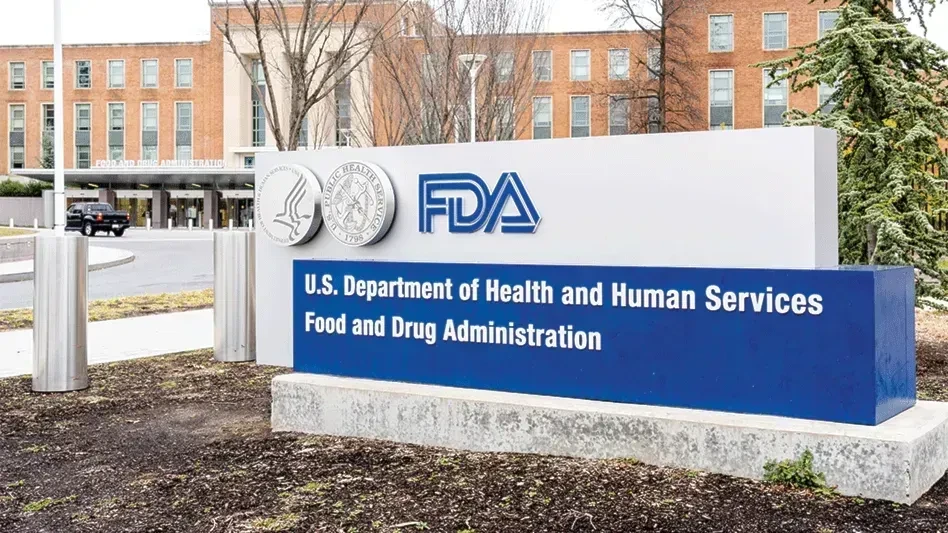
A new study suggests that the U.S. Food and Drug Administration (FDA) could generate resources to strengthen its oversight of the nation’s food supply by collecting user fees from food companies.
The analysis, “Advancing the FDA’s Human Foods Program Through Additional Authorities and User Fees,” was published in the journal Health Affairs last month by authors Jennifer L. Pomeranz, Sean B. Cash, Emily Broad Leib and Dariush Mozaffarian.
The FDA already collects user fees from drug and medical device companies and accreditation and certification bodies to supplement the annual funding Congress provides.
These fees were implemented to help the agency facilitate timely availability of innovative FDA-regulated products. Congress determines the FDA’s funding, including the amount of FDA user fees, and the agency can only spend user fees on activities that Congress specifically allows.
According to the new study, in 2022, user fees made up 66% of the $2.1 billion budget for regulating drugs and all of the $680 million tobacco budget, compared to 1% of the $1.1 billion foods program budget.
Under FSMA, the FDA currently has the authority to collect limited food-specific user fees.
“The FDA is persistently understaffed and underfunded, hampering its ability to ensure the safety of our country’s food supply,” said Pomeranz, associate professor of public health policy and management at NYU School of Global Public Health and the study’s first author. “A comprehensive user fee program for food could benefit the food industry and facilitate the FDA’s review of products and ingredients — both before and after they go to market — to improve public health.”
The agency’s lack of resources was documented in the Reagan Udall Foundation’s 2022 operational evaluation of the FDA’s Human Foods Program, an assessment former FDA Commissioner Robert Califf requested to help the agency make changes to better carry out its regulatory responsibilities.
The researchers’ analysis raises concerns about the FDA’s ability to fulfill critical food safety responsibilities related to its review of food and color additives and ingredients deemed “generally recognized as safe” (GRAS) by industry, especially unreviewed ingredients added to ultra-processed foods. It also highlights the recent rash of state bans on food ingredients, which the study says have exposed “the limits of the FDA’s oversight and created regulatory inconsistency.”
The analysis shares data that suggests the FDA does not meet the statutory and regulatory timelines set for its review of premarket submissions, including food and color additive petitions, proposed labeling claims and new infant formula notifications.
“For too long, the work and budget of the FDA has neglected foods — which have far greater cumulative health benefits and harms for Americans’ health than drugs,” said study senior author Dariush Mozaffarian, director of the Food is Medicine Institute and distinguished professor at the Friedman School of Nutrition Science and Policy at Tufts University. “It’s time to put the ‘F’ back in FDA, with real resources designated by Congress, which could include a carefully crafted user fee program."
Read the full study here.
Latest from Quality Assurance & Food Safety
- Aston University and Mondelēz International Partner to Reimagine Food Engineering Technologies
- Rep. DeLauro, Sen. Casey Introduce Infant Formula Made in America Act
- FDA Releases the CORE 2024 Annual Report
- FSIS Shares Lessons Learned from Listeria Outbreak Linked to Meat and Poultry
- Vitsab Showcases Freshtag Time-Temperature Monitoring Labels at Seafood Processing North America 2026
- USDA Proposes to Delay Effective Date of Poultry Grower Payment Systems Final Rule
- FDA Withdraws COVID-Era FSMA Guidance
- FDA Investigates Raw Cheese E. Coli Outbreak as Manufacturer Declines Recall