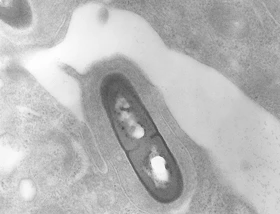
TROMSØ, Norway - Researchers with Nofima, the Norwegian Institute of Food, Fishery and Aquaculture are reporting that experiments involving the simulation of Listeria bacteria can lead to safer, ready-made food products.
Research Fellow Sonja Grönqvist has worked on two methods of how the pathogenic bacteria Listeria monocytogenes in food may be killed. In one part of the project, Listeria is encapsulated in porous alginate beads (gelatinous beads), which may simulate the structure of the food during heat treatment, Nofima reports. The other part of the project utilizes an enzyme that has the same rate of degradation in heat processes as Listeria, and is referred to as a time temperature integrator (TTI). It is easier to use a harmless enzyme when conducting research in real production lines, as this avoids contamination of the processing equipment and foods. This method was tested in full-scale production of grilled fish cakes, and showed that this type of TTI was simple to use and is useful in documenting that secure targets are achieved for heat treatment in complicated heat processes.
Read the full report from Nofima here.
Latest from Quality Assurance & Food Safety
- Director General of IICA and Senior USDA Officials Meet to Advance Shared Agenda
- EFSA and FAO Sign Memorandum of Understanding
- Ben Miller Breaks Down Federal Cuts, State Bans and Traceability Delays
- Michigan Officials Warn Recalled ByHeart Infant Formula Remains on Store Shelves
- Puratos USA to Launch First Professional Chocolate Product with Cultured Cocoa
- National Restaurant Association Announces Federal Policy Priorities
- USDA Offloads Washington Buildings in Reorganization Effort
- IDFA Promotes Andrew Jerome to VP of Strategic Communications and Executive Director of Foundation