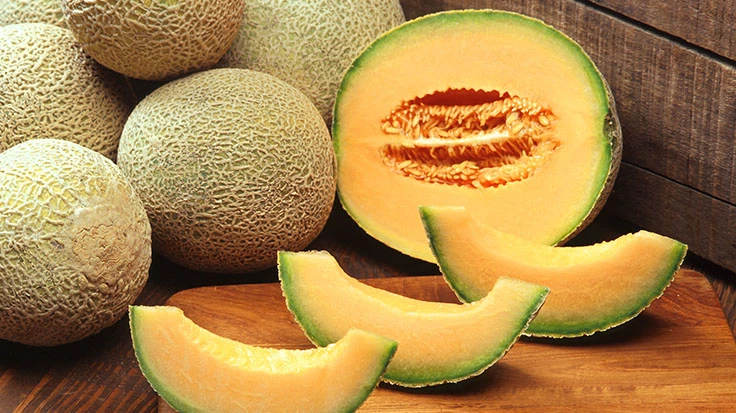
ContagionLive - According to new research, applying antimicrobial coatings to whole cantaloupes during storage significantly reduces contamination by pathogenic bacteria, and has the potential to improve their microbiological safety and extend their shelf life. Qiumin Ma, PhD, from the University of Tennessee in Knoxville, and colleagues published the results of their study in the International Journal of Food Microbiology.
Chitosan-based coatings “significantly inhibited the growth of E. coli O157:H7, L. monocytogenes and S. enterica cocktails on whole cantaloupes during 14-day storage at ambient temperature (21°C),” the authors wrote. “Coatings also significantly reduced total mold and yeast counts on whole cantaloupes.”
Chitosan, derived from the polysaccharide chitin, is known to have film-forming properties as well as antimicrobial activity. Chitosan-based coatings have also been shown to improve food safety in fresh produce. With this in mind, Dr. Ma and colleagues conducted a study to investigate the efficacy of such antimicrobial coatings in reducing bacterial populations from the surface of cantaloupes. In addition to chitosan, they investigated two GRAS antimicrobials—lauric arginate and cinnamon oil, along with ethylenediaminetetraacetic acid (EDTA).
Read the full article at ContagionLive.
Access the study at NCBI.
Latest from Quality Assurance & Food Safety
- FDA Releases Produce Regulatory Program Standards
- Invest in People or Risk the System: Darin Detwiler and Catalyst Food Leaders on Building Real Food Safety Culture
- USDA Proposes Increasing Poultry, Pork Line Speeds
- FDA Releases New Traceability Rule Guidance
- TraceGains and iFoodDS Extend Strategic Alliance
- bioMérieux Launches New Platform for Spoiler Risk Management
- SafetyChain Receives SOC 2 Type 2 Certification
- Puratos Acquires Pennsylvania-Based Vör Foods