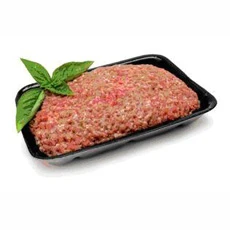
Taking new steps to fight E. coli, USDA has added six additional serogroups of pathogenic E. coli to be declared adulterants in non-intact raw beef. Raw ground beef, its components, and tenderized steaks found to contain these bacteria will be prohibited from sale to consumers. USDA's Food Safety and Inspection Service (FSIS) will launch a testing program to detect these dangerous pathogens and prevent them from reaching consumers.
As a result of the action, if the E. coli serogroups O26, O103, O45, O111, O121 and O145 are found in raw ground beef or its precursors, those products will be prohibited from entering commerce. Like E. coli O157:H7, these serogroups can cause severe illness and even death, and young children and the elderly are at highest risk. The CDC identifies these serogroups of non-O157:H7 Shiga-toxin producing E. coli, or non-O157 STEC, as those responsible for the greatest numbers of non-O157 STEC illnesses, hospitalizations, and deaths in the United States.
"Too often, we are caught reacting to a problem instead of preventing it," said Agriculture Secretary Tom Vilsack. "This new policy will help stop problems before they start."
"As non-O157 STEC bacteria have emerged and evolved, so too must our regulatory policies to protect the public health and ensure the safety of our food supply," added Under Secretary Elisabeth Hagen.
FSIS will begin testing for the six serogroups and enforcing the new policy on March 5, 2012. The Agency invites interested persons to submit comments within 60 days of publication in the Federal Register.
Latest from Quality Assurance & Food Safety
- FDA Releases Produce Regulatory Program Standards
- Invest in People or Risk the System: Darin Detwiler and Catalyst Food Leaders on Building Real Food Safety Culture
- USDA Proposes Increasing Poultry, Pork Line Speeds
- FDA Releases New Traceability Rule Guidance
- TraceGains and iFoodDS Extend Strategic Alliance
- bioMérieux Launches New Platform for Spoiler Risk Management
- SafetyChain Receives SOC 2 Type 2 Certification
- Puratos Acquires Pennsylvania-Based Vör Foods