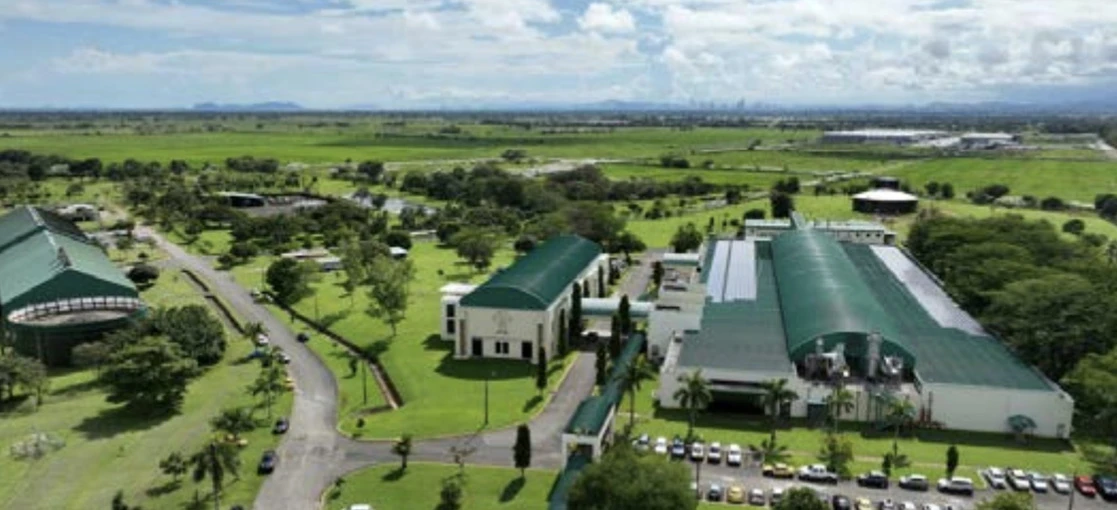
COPEG facility in Pacora, Panama | Photo by COPEG
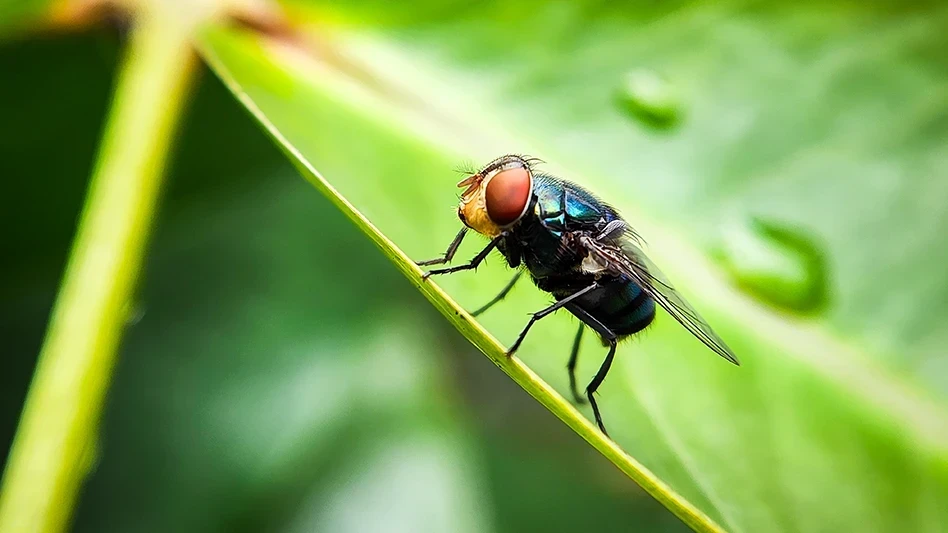
WASHINGTON, D.C. – The U.S. Department of Energy’s National Nuclear Security Administration’s (NNSA) Office of Radiological Security (ORS) has partnered with Texas A&M University to combat the New World screwworm (NWS), a devastating pest that significantly damages, and sometimes kills, livestock, wildlife, pets and humans.
This concern became more acute last week as the U.S. Department of Agriculture (USDA) announced that NWS had been found less than 75 miles from the U.S. border near one of the most heavily trafficked commercial thoroughfares in the world.
A robust agriculture sector is vital for American security, said NNSA. NNSA partnered with Texas A&M’s National Center for Electron Beam Research (NCEBR) to advance the Sterile Insect Technique (SIT) using electron beam (eBeam) technology in place of radioactive cobalt. SIT prevents the spread of NWS by releasing sterilized male screwworms to halt reproduction and reduce their population, said NNSA.
ORS’s mission includes preventing the misuse of highly radioactive materials and promoting innovative alternatives like eBeam devices. The eBeam technology eliminates the need for radioactive sources, which could be used for nefarious purposes if they fell into the wrong hands, said NNSA. This collaboration enhances radiological security best practices nationwide, thus strengthening national security, said NNSA.
“Our mission-driven partnership with Texas A&M is essential to advancing American innovation in eBeam applications and enhancing our national security,” said Kristin Hirsch, director of ORS. “With the support of Texas A&M AgriLife experts, NNSA is able to help combat the spread of the NWS, building stronger food systems and safer communities across the country.”
USDA recently announced a new NWS fly dispersal facility in Texas and a five-pronged plan for eradicating the pest. The plan includes the USDA pursuing innovative research, such as eBeam and other technologies.
Though the NWS has recently re-emerged as a threat to the homeland, NNSA’s longstanding partnership with Texas A&M is crucial for leveraging academic expertise to combat it and other emerging national security challenges, said NNSA.
Currently, SIT relies on cobalt-60 gamma sterilization. But cobalt-60 carries significant radiological security risks, so NNSA, NCEBR and Texas A&M’s Department of Entomology have worked to find replacement methods, said NNSA. Through modeling studies sponsored by NNSA and conducted by Texas A&M since 2023, researchers identified eBeam technology as a viable alternative and are working to make it available to USDA to combat this threat that is now less than 75 miles from the U.S., said NNSA.
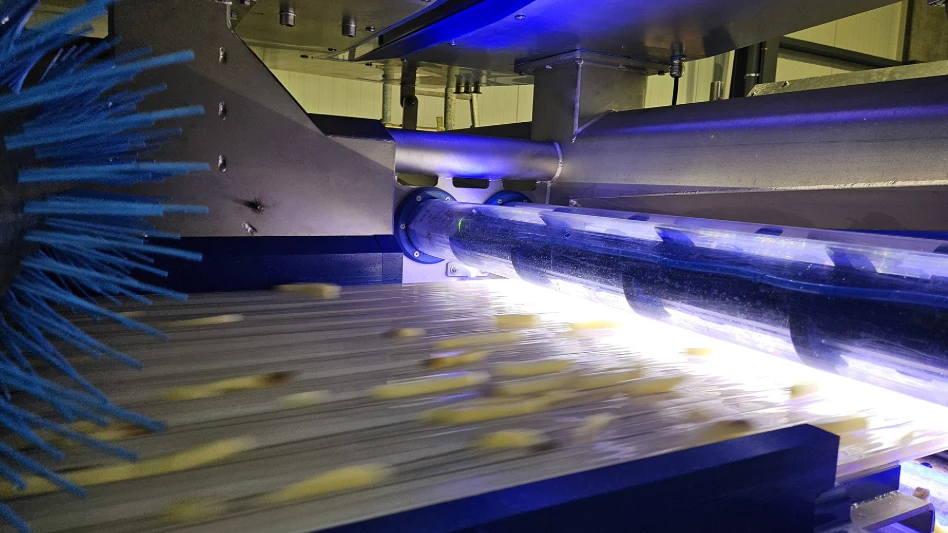
NNSA has been collaborating on the development of an eBeam system to be used for chemical remediation, another critical area where cobalt-60 use could become a risk. With the screwworm bearing down on the U.S., NNSA is repurposing this technology toward NWS response and accelerating development to make eBeam available to USDA by early 2026. Once integrated into a rearing facility, it could create over 100 million sterile flies in 24 hours, said NNSA. That’s a vast improvement over cobalt-60, which can take a week to do the same amount. This efficiency would be a game-changer in NWS response, said NNSA.
The Mexico-U.S. border is critical to NWS prevention. By partnering with Texas A&M, NNSA is promoting the U.S. eBeam industry, advancing American investment, protecting the country and safeguarding vital food systems, said NNSA.
“This collaboration with NNSA enables Texas A&M AgriLife to contribute innovative agriculture research that is essential to our nation’s food security,” said Suresh Pillai, director of NCEBR at Texas A&M. “We are proud to support NNSA in their mission to enhance the security of the United States.”
“NNSA is determined to protect America’s agriculture industry in the face of emerging challenges,” said Christine Bent, assistant deputy administrator for Global Material Security. “Through the strength of our partnership with Texas A&M, along with other academic, government and business partnerships, NNSA works to protect our farms, our food and our nation.”
Latest from Quality Assurance & Food Safety
- FDA Releases Produce Regulatory Program Standards
- Invest in People or Risk the System: Darin Detwiler and Catalyst Food Leaders on Building Real Food Safety Culture
- USDA Proposes Increasing Poultry, Pork Line Speeds
- FDA Releases New Traceability Rule Guidance
- TraceGains and iFoodDS Extend Strategic Alliance
- bioMérieux Launches New Platform for Spoiler Risk Management
- SafetyChain Receives SOC 2 Type 2 Certification
- Puratos Acquires Pennsylvania-Based Vör Foods