PRNewswire/Marler Clark
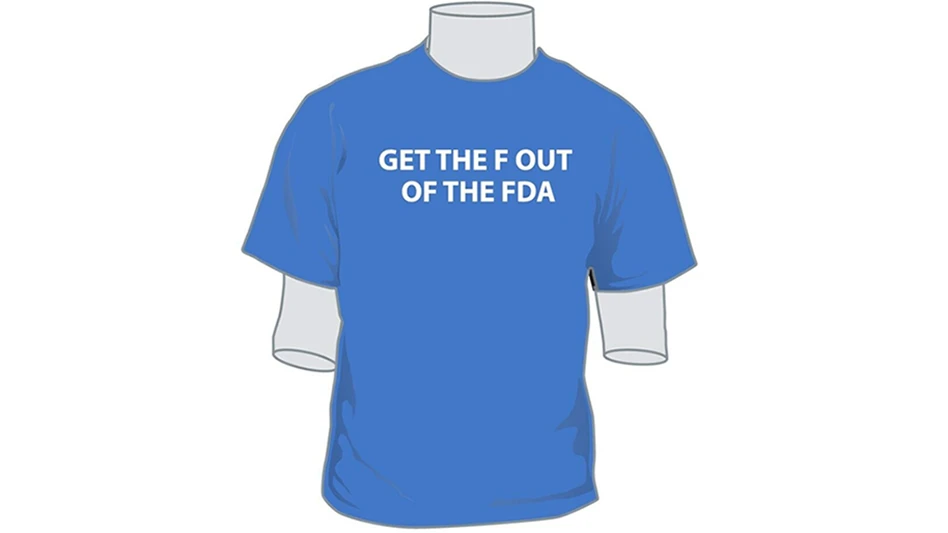
SEATTLE — Following last year’s infant formula crisis, food safety attorney Bill Marler of Marler Clark, The Food Safety Law Firm, has launched the “Get the F Out of the FDA” campaign.
Marler wants Congress and the White House to separate the drug side from the food side of the U.S. Food and Drug Administration (FDA), essentially creating a new dedicated food agency focused on both food safety and human nutrition.
Marler Clark sent free t-shirts to over 750 people and hand delivered 250 of them to Congressional leaders in Washington, D.C. Dozens have also been sent to past and current members of FDA.
"Each year, millions of Americans are sickened, and thousands die from foodborne illness," said Marler. "And yet, the leadership of the FDA continues to be preoccupied with drug oversight and to give short shrift to food safety."
The campaign is in response to FDA's failure to adequately inspect infant formula manufacturer Abbott Laboratories last fall, which led to ill children, a recall, a plant closure and shelves bare of infant formula, said the law firm. Marler is calling into question FDA Commissioner Robert Califf’s choice to ignore what experts, including an independent panel Califf himself commissioned, told him is needed to fix the problems.
"It is not only galling but also tragic that the Commissioner's so-called plan to fix the dysfunctional structure and culture that allows for messes like the infant formula fiasco, ongoing foodborne illness outbreaks and the surge in obesity, diabetes and heart disease caused by food,” said Marler. “The changes the Commissioner has proposed stand no chance of fixing the systemic problems with the agency and simply exposes the flaw in having drug experts oversee the nation's food supply.”
The solution, Marler said, is to remove food from FDA’s purview.
"We need to separate the FDA functions between Food (food safety and human nutrition) and Drugs (and medical devices),” he said. “For too long, those at the top of FDA have focused on what they know and care about — medical drugs and devices. And FDA food issues have been overlooked and underfunded.
“It is time the White House and the Congress take responsibility for protecting the public by breaking the FDA apart and creating a new dedicated foods agency. At the same time, they need to reject the Commissioner's ineffective plan and immediately direct the Commissioner to unify all parts of the foods program and budget under an empowered and accountable Deputy Commissioner.”
Marler is not the first to call for a new foods agency. Last year, an op-ed by Michael Taylor, who served as FDA’s deputy commissioner for foods and veterinary medicine from 2010-2016, put forth the idea of creating a new foods agency.
Also last year, Rep. Rosa DeLauro (D-Conn.) and Sen. Dick Durbin (D.-Ill) introduced legislation that would establish a separate foods agency.
“My goal in launching this campaign is to say let's make this happen now,” Marler said. “I don't want the failures of the FDA to create new victims I will need to represent. Create a new foods agency and put me out of business, please! I don't want to have to represent families who will have lost their children because FDA doesn't have the courage to act.”
CRONOBACTER SAZAKII. Marler is also distributing shirts that say, "For Babies Sake, Make Cronobacter sazakii Reportable.”
After reviewing the investigation into last year’s Abbott infant formula outbreak and recall, Marler said he believes it could have been prevented if the law required reporting Cronobacter sazakii as an adulterant in food. Currently, only two states require reporting of Cronobacter sazakii.
To send a clear message to decision makers, Marler sent t-shirts to the Council of State and Territorial Epidemiologists, who are tasked with making recommendations as to what pathogens are reportable.
"I hope that these t-shirts will be a reminder of the awesome responsibility that this council has to protect the public," said Marler.
The FDA had reports of safety failures at the Abbott plant months before the contaminated formula sickened babies and caused two deaths.
In testimony to Congress regarding the infant formula crisis last year, Califf said, “The CDC receives reports on foodborne disease outbreaks from state, local and territorial health departments. On average, CDC receives two to four Cronobacter case reports annually; however, because Cronobacter infection is not reportable in most states, the total number of cases that occur in the United States each year is not known.”