IFT
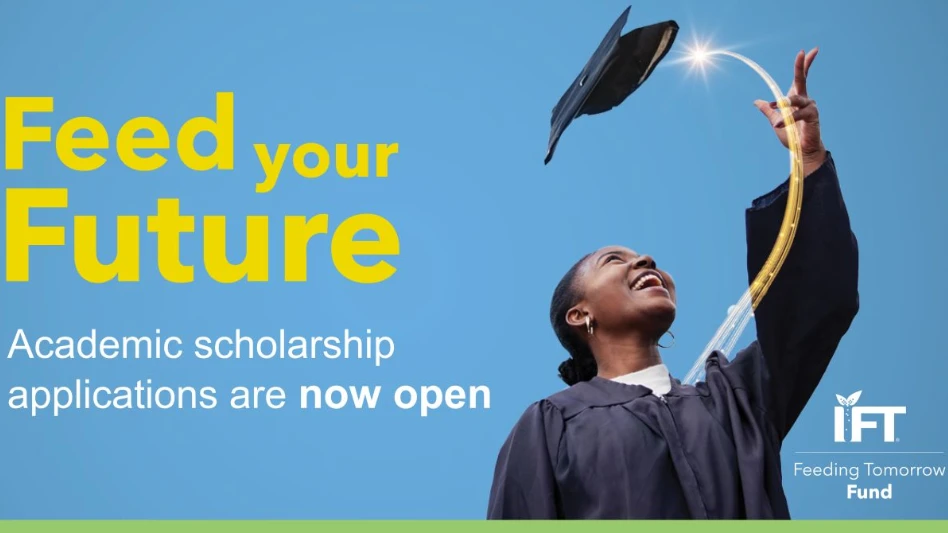
CHICAGO – The Institute of Food Technologists (IFT) announced that applications are now open for more than 100 undergraduate and graduate scholarships totaling over $260,000. The scholarships are courtesy of IFT’s Feeding Tomorrow Fund, which encourages, promotes and rewards the excellence of students pursuing careers in the science of food, IFT said.
Scholarship opportunities include the prestigious Elwood F. Caldwell Graduate Fellowship, which awards a $25,000 stipend to students currently enrolled in a master’s or doctoral program in food science. The stipend was created from an endowment by long-time IFT member and fellow, Elwood Caldwell, Ph.D. — widely recognized as one of the pioneers in cereal science for his work as director of research and development for Quaker Oats, according to IFT.
“The future of food science is written by curious minds and bold ideas, and every year Feeding Tomorrow Fund scholarships help students turn their dreams into reality and support them on their journeys toward solving the greatest challenges in food and nutrition,” said Nina Steele, IFT director of engagement, inclusion and volunteer development. “For more than 40 years, the IFT community has been proud to support students through the Feeding Tomorrow Fund as it is an important investment in not only the food science students determined to change the world, but the future of food, as well.”
IFT’s Feeding Tomorrow Fund, which has awarded more than 2,800 scholarships and over $3 million to food science students since 1985, provides undergraduate and graduate academic scholarships in various areas, including financial need, community college transfer, first-generation college enrollment and in fields like food engineering and sensory and consumer science.
“Receiving the Feeding Tomorrow scholarship allowed me to focus on the Food Science Club, ultimately become club president, and develop the leadership and soft skills that shaped my academic and professional path,” said Morgan Denzer, previous Feeding Tomorrow Fund scholarship winner and now an instructor in the Dale Bumpers College of Agricultural, Food and Life Sciences at the University of Arkansas. “The scholarship also gave me the confidence to attend my first IFT event, really immerse myself in IFT and IFTSA, and start to build connections and develop that network beyond my university network.”
Denzer now advises the Food Science Club and College Bowl teams at the University of Arkansas that have competed in recent College Bowl finals at IFT FIRST Annual Expo and Event, which is being held this year from July 12-15, at McCormick Place in Chicago.
To be eligible, applicants for all scholarships must demonstrate a commitment to the science of food, such as, but not limited to, membership in IFT. Student members gain access to various resources that assist them in their food science careers, IFT said. This includes participation in the Institute of Food Technologists Student Association (IFTSA), a mission-driven, student-governed organization that supports student members and chapters and aims to develop the future leaders within the science of food.
The application deadline for all scholarships is March 2.
To learn more and apply, please visit IFT's Feeding Tomorrow Fund Scholarships page. Interested students may also email International Scholarship and Tuition Services at ContactUs@applyists.com or IFT at feedingtomorrow@ift.org.
Latest from Quality Assurance & Food Safety
- ASI Unveils New Global Identity as Kiwa ASI
- FDA and Partners Release Findings from California Longitudinal Study
- Director General of IICA and Senior USDA Officials Meet to Advance Shared Agenda
- EFSA and FAO Sign Memorandum of Understanding
- Ben Miller Breaks Down Federal Cuts, State Bans and Traceability Delays
- Michigan Officials Warn Recalled ByHeart Infant Formula Remains on Store Shelves
- Puratos USA to Launch First Professional Chocolate Product with Cultured Cocoa
- National Restaurant Association Announces Federal Policy Priorities