Adobe Stock | Monopoly919
Editor's note: The following article was written by John Li, technology analyst at IDTechEx, about the service robots predicted to dominate the market in the next 10 years according to the company's new report.
The service robotics industry has grown quickly in recent years, spurred on by advances in robotics technology and artificial intelligence (AI), and is set to alleviate labor shortage issues across multiple industries.
Service robots, as covered in the new IDTechEx report, “Service Robots 2026-2036: Technologies, Players & Markets," can be used to automate several industries, including logistics and delivery, cleaning, agriculture, underwater exploration, food service and social interaction. Although each application presents advantages, their stages of commercialization vary significantly, with some being well-developed, attracting billions of U.S. dollars in annual revenue, whereas others, despite their huge potential, are still emerging and may only reach full commercialization by the end of the decade. This IDTechEx article examines the winners in the short and long term in the service robots market.
Logistics and Delivery Robots Market to Exceed US$60 Billion in Ten Years
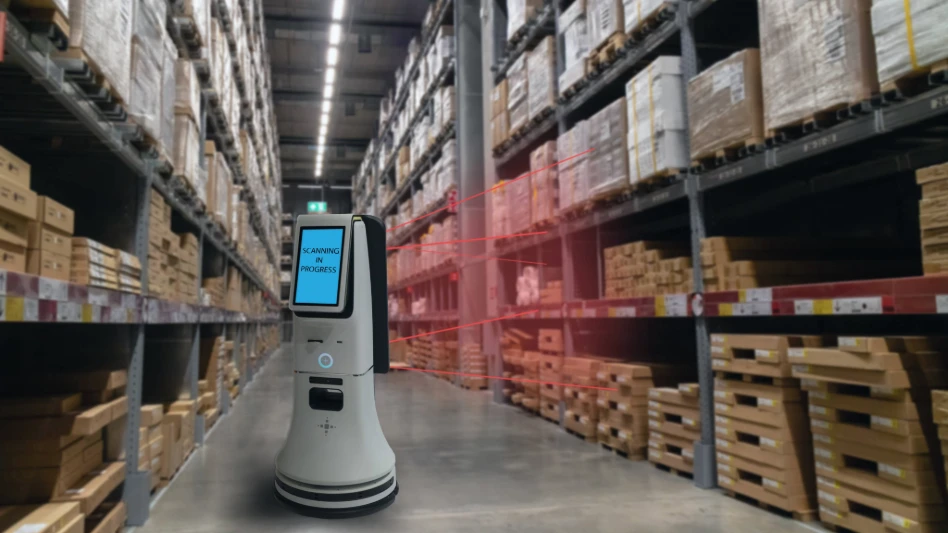
Logistics robots perform many tasks that were initially developed for tightly controlled, standardized manufacturing environments and have since been extended to warehousing, wholesale and e-commerce sales in the service sector. Among these, Automated (or Autonomous) Guided Vehicles (AGVs) to move cargo, such as crates and shelves, and occasionally people, were first used in the structured spaces of factories and required special flooring for motion guidance. With advances in robotics, these devices require relatively simpler signage, such as floor marking stickers.
They are increasingly able to move autonomously and avoid obstacles in less structured environments, such as airports or large floors. As technologies continue to evolve, the industry has transitioned away from AGVs ‘independent’ or ‘infrastructure-free’ autonomous mobile robots. In the future, humanoid robots can also be used for more complex material handling tasks, and are included in IDTechEx’s forecasts. Overall, the logistics and delivery robots are and will continue to be the largest service robots market, according to IDTechEx’s research.
Cleaning Robots Will be the Second Largest Service Robot Market
Cleaning robots refer to all the robots with the capabilities of cleaning and disinfecting their surrounding environments. The demand for automated, remote and no-contact cleaning throughout the COVID-19 pandemic resulted in increased interest, with IDTechEx forecasting the market to exceed US$20 billion by 2036.
There are different types of cleaning robots, including robotic vacuum cleaners, deck-cleaning robots, disinfection robots and many others. While robotic vacuum cleaners are now extremely common globally, deck-cleaning robots and pipe/tube cleaning robots are rarer, although IDTechEx forecasts deck-cleaning robots to become mainstream in the long term. These robots, along with other types of cleaning robots, are analyzed and forecasted in IDTechEx’s new report, “Service Robots 2026-2036: Technologies, Players & Markets."
Kitchen Robots Will Grow 20-Fold from a Much Smaller Base
Compared to cleaning and logistics robots, the technical barrier to implementing kitchen and restaurant robots is greater, providing an additional barrier to increased adoption. This has resulted in a lower demand overall for kitchen and restaurant robots, with IDTechEx estimating the market to be worth less than US$50 million, as of 2025. However, owing to a relatively small market in 2025, IDTechEx does forecast an increase in market size of 20 times for kitchen and restaurant robots over the coming decade. Kitchen and restaurant robots include robotic waiters and robotic cooking arms, to fully automated kitchen systems.
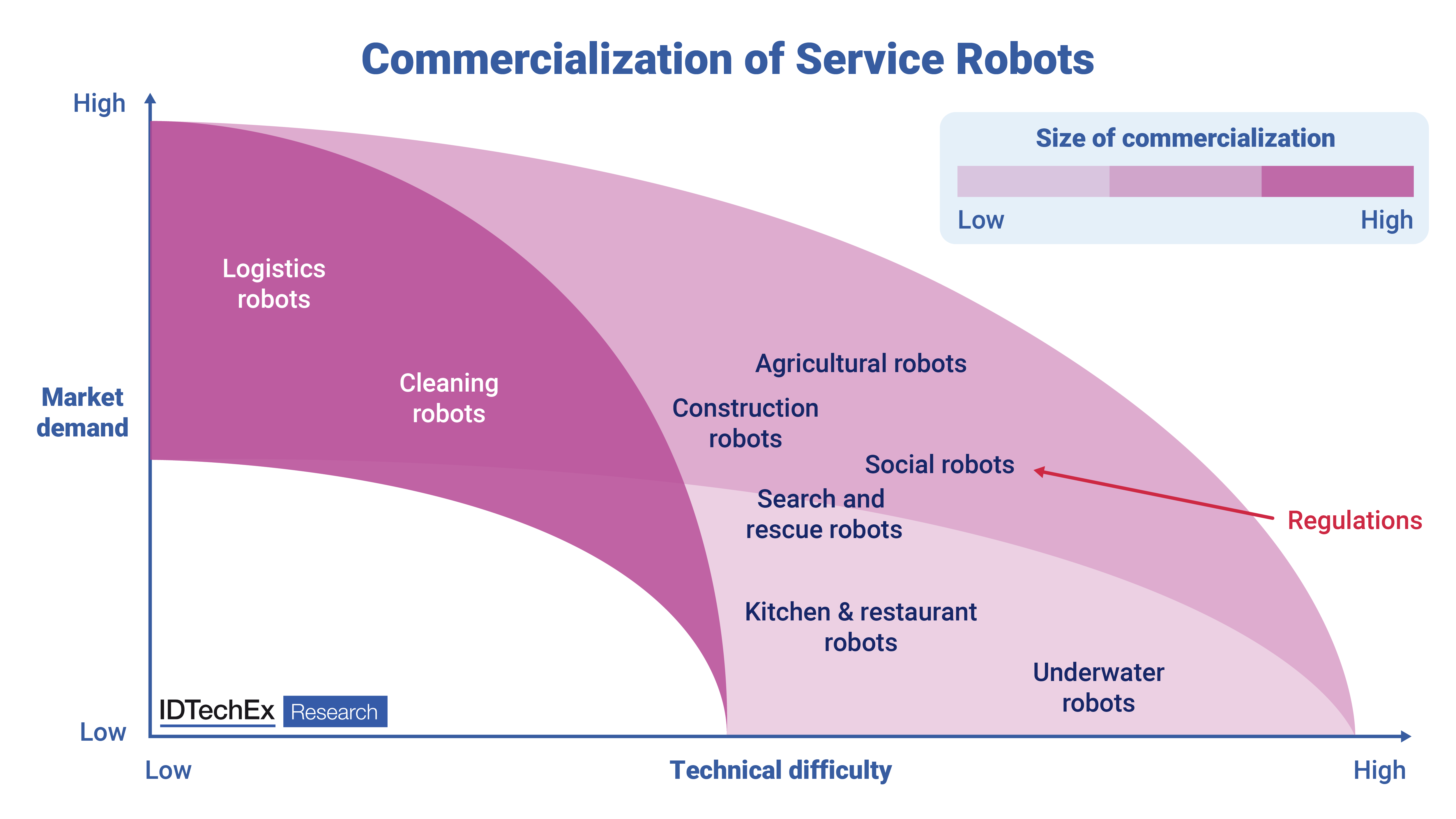
IDTechEx’s new report, “Service Robots 2026-2036: Technologies, Players and Markets," includes emerging technologies and stages of development for each application, regulations around social robots and logistics robots, and financial impacts on the future trends. For each type of robot, potential application areas and companies are analyzed. A 10-year granular market forecast is given for each category of robot, including social robots, delivery and logistics, disinfection and cleaning, agricultural, kitchen and restaurants, underwater, search and rescue, and construction robots.
For more information on this report, including downloadable sample pages, visit www.IDTechEx.com/ServiceRobots, or for the full portfolio of robotics research available from IDTechEx, see www.IDTechEx.com/Research/Robotics.
Latest from Quality Assurance & Food Safety
- FDA Releases Produce Regulatory Program Standards
- Invest in People or Risk the System: Darin Detwiler and Catalyst Food Leaders on Building Real Food Safety Culture
- USDA Proposes Increasing Poultry, Pork Line Speeds
- FDA Releases New Traceability Rule Guidance
- TraceGains and iFoodDS Extend Strategic Alliance
- bioMérieux Launches New Platform for Spoiler Risk Management
- SafetyChain Receives SOC 2 Type 2 Certification
- Puratos Acquires Pennsylvania-Based Vör Foods