BP’s most recent efforts at quelling the gushing oil well in the Gulf of Mexico involve a “Top Kill” procedure, which officials and engineers say appears to be working. However, a BP release notes that the effort could take up to two days, and it cannot be predicted how long it will take for the operation to prove successful. “This top kill procedure has not been carried out offshore at 5,000 feet water depth before, and its success cannot be assured,” the release noted.
Meanwhile, government officials are citing a worse then expected effect on fish and wildlife. "This spill is significant, and in all likelihood will affect fish and wildlife resources in the Gulf – and across the North American Continent, for years, if not decades, to come," said Fish and Wildlife Service Acting Director Rowan Gould. Oil has the potential to persist in the environment long after a spill and have long-term impacts on fish and wildlife.
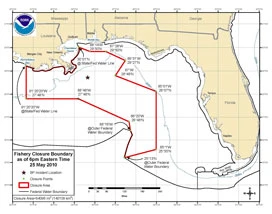
Earlier this week, the area that has been closed to fishing by the National Oceanic and Atmospheric Administration (NOAA, was extended to 54,096 square miles, which is slightly more than 22 percent of Gulf of Mexico federal waters. This leaves more than 77 percent of Gulf federal waters still available for fishing.
The federal and state governments have systems in place to test and monitor seafood safety, prohibit harvesting from affected areas, and keep oiled products out of the marketplace. NOAA is working with the FDA and the states to ensure seafood safety, by closing fishing areas where tainted seafood could potentially be caught, and assessing whether seafood is tainted or contaminated to levels that pose a risk to human health. NOAA and FDA are working to implement a broad-scaled seafood sampling plan. The plan includes sampling seafood from inside and outside the closure area, as well as dockside- and market-based sampling.
According to NOAA, there are approximately 5.7 million recreational fishermen in the Gulf of Mexico region who took 25 million fishing trips in 2008. Commercial fishermen in the Gulf harvested more than one billion pounds of fish and shellfish in 2008.
Latest from Quality Assurance & Food Safety
- Director General of IICA and Senior USDA Officials Meet to Advance Shared Agenda
- EFSA and FAO Sign Memorandum of Understanding
- Ben Miller Breaks Down Federal Cuts, State Bans and Traceability Delays
- Michigan Officials Warn Recalled ByHeart Infant Formula Remains on Store Shelves
- Puratos USA to Launch First Professional Chocolate Product with Cultured Cocoa
- National Restaurant Association Announces Federal Policy Priorities
- USDA Offloads Washington Buildings in Reorganization Effort
- IDFA Promotes Andrew Jerome to VP of Strategic Communications and Executive Director of Foundation