Freshpet
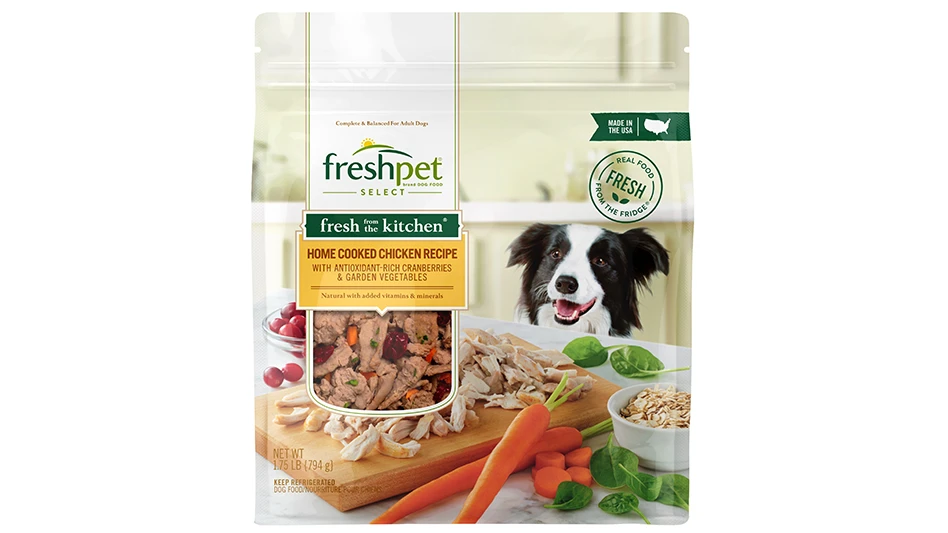
BEDMINSTER, N.J. — Freshpet, a manufacturer of fresh food for pets, announced that its entire U.S. and Canadian product line has earned Clean Label Project's Purity Award for ingredient quality and safety.
This certification is awarded by the nonprofit Clean Label Project, which tests products for heavy metals, pesticides and environmental contaminants to evaluate ingredient quality and safety.
Certification of Freshpet recipes began in early 2025, and today, its full portfolio meets the Clean Label Project's thresholds for heavy metals, industrial and environmental toxins.
Freshpet said it is the first and only pet food brand to be Clean Label Project-certified and have its entire product line recognized with the organization's Purity Award, a distinction reserved for the top third of performers in a product category.
To earn the Clean Label Project certification, products must undergo extensive independent lab testing that tests for more than 100 environmental and industrial contaminants, including heavy metals (lead, cadmium, arsenic and mercury), bisphenols (BPA, BPS), phthalates (CBP and DEHP), acrylamide, pesticides and more.
"Twenty years ago, we set out to create a fundamentally different kind of pet food, made from real, simple ingredients and prepared in our own kitchens," said Scott Morris, co-founder and president of Freshpet. "We believed that by doing things differently, we could deliver cleaner, higher-quality nutrition for pets. Clean Label Project's Purity Award validates that belief and reinforces our commitment to raising the standard for pet food."
Clean Label Project’s Dog Food Category Report.
The announcement follows the release of Clean Label Project's new Dog Food Category Report, which reported that many dry dog foods contain higher levels of heavy metals and industrial contaminants than fresh and frozen dog foods, as well as higher levels than more than 3,280 human consumable products tested over the past decade.
The Clean Label Project found that fresh and frozen dog food products, including all Freshpet recipes, had the lowest heavy metal levels of any segment tested and were lower on average than the organization's benchmark for human consumables across arsenic, cadmium, mercury, lead, acrylamide and DEHP, an industrial plasticizer, according to Freshpet.
According to the study of 79 top-selling dog foods with more than 11,000 individual tests, traditional dry dog food averaged 13.3 times more arsenic and 20 times more lead and mercury, as well higher levels of DEHP and acrylamide (a chemical that can form in foods during high-heat cooking) than fresh dog food.
"Most pet owners assume the food they buy for their dogs is held to the same safety standards as human food, but that's simply not true," said Molly Hamilton, executive director of Clean Label Project. "Our findings show that many dry dog foods contain significantly higher levels of toxic heavy metals than fresh or frozen dog food and the average human-consumable product. Given that dogs often eat the same food every day, this raises important questions about long-term exposure and the need for greater transparency and stronger safety standards."
"Contaminants like heavy metals and industrial chemicals do not show up on a traditional ingredient list, yet they are what many health-conscious pet parents worry about for themselves and their pets," added Dr. Lisa Weeth, board certified veterinary nutritionist and head of veterinary research and communications at Freshpet. "Independent verification from the Clean Label Project gives veterinarians and families data to help them make informed decisions when choosing a fresh diet over conventional options."
Latest from Quality Assurance & Food Safety
- Hormel Sells Whole-Bird Turkey Business to Life-Science Innovations
- QuantiPath Introduces Turkey KPI Kits for Salmonella Detection and Quantification
- 360training Acquires Canadian Food Safety Group
- Saputo Recalls Great Value Cottage Cheese Due to Possible Pasteurization Issue
- FDA Updates Infant Formula Resources
- Pitch Competition Returns to IFT FIRST Annual Event and Expo
- Sterling Expands GPL and LHE Chiller Lines for Use in Food and Beverage Production
- FDA Releases Produce Regulatory Program Standards