FDA
WASHINGTON, D.C. — The U.S. Food and Drug Administration (FDA) is warning retailers and consumers not to sell or use certain imported cookware that may leach significant levels of lead into food.
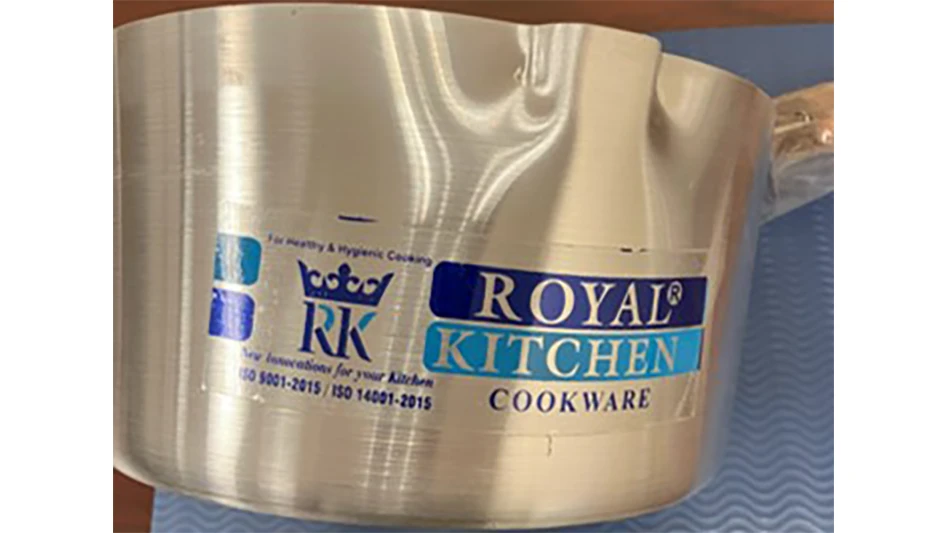
Some types of imported cookware products made from aluminum, brass and aluminum alloys known as hindalium/hindolium or indalium/indolium have been tested by FDA and state partners and have demonstrated the potential to leach lead under conditions designed to mimic their use in contact with food, the agency said.
Young children, women of child-bearing age and those who are breastfeeding may be at higher risk for potential adverse events after eating food cooked using these products, said FDA.
FDA continues to add cookware products that may leach lead into food when used for cooking or food storage to this table. The agency’s collection and sampling of cookware products remain ongoing.
FDA’s Recommendations.
Consumers should check their homes for the products listed and throw away any cookware that may be able to leach lead into food when used for cooking or food storage, said FDA. The agency warned against donating or refurbishing this cookware.
Consumers who have concerns about lead exposure or elevated levels of lead should contact their health care provider, said FDA.
Retailers and distributors are responsible for ensuring cookware sold and/or distributed for use in contact with food are safe for their intended use and comply with all FDA regulations. Various testing methods for leachable lead are available, or retailers/distributors may use FDA’s lead leach testing protocol for cookware.
Retailers and distributors of cookware are encouraged to consult with the FDA regarding the safety and regulatory status of any products used in contact with food that they market or distribute. Questions for FDA related to this topic can be sent to premarkt@fda.hhs.gov.
Health Concerns from Lead Exposure.
Lead is toxic to humans and can affect people of any age or health status, and there is no known safe level of exposure to lead. Even low levels of lead exposure can cause serious health problems, particularly in children and fetuses, said FDA.
Consuming food with elevated lead levels can contribute to elevated levels of lead in the blood. Children and babies are more susceptible to lead toxicity due to their smaller body size, metabolism and rapid growth, said the agency. At low levels, children may not have obvious symptoms but can still experience trouble learning, low IQ and behavior changes, according to FDA. At higher levels of lead exposure, people may experience fatigue, headache, stomach pain, vomiting or neurologic changes, the agency said.
FDA Action.
There are no FDA regulations that authorize lead for use as a color additive or food additive (including as a component of foodware, cookware or food contact surfaces), said the agency. To protect public health, FDA monitors levels of lead in foods and leachable lead levels in cookware.
FDA collaborates with state and federal partners, industry and other stakeholders to identify and facilitate the implementation of sustainable and effective strategies for growing, sourcing, processing and manufacturing foods to support lowering levels of environmental contaminants, such as lead, while maintaining their nutritional quality and accessibility.
The agency said it is actively working to remove cookware from the market that may leach lead into food when used for cooking. Surveillance is ongoing, and additional products will be added to this alert as needed.
Latest from Quality Assurance & Food Safety
- FDA Releases Produce Regulatory Program Standards
- Invest in People or Risk the System: Darin Detwiler and Catalyst Food Leaders on Building Real Food Safety Culture
- USDA Proposes Increasing Poultry, Pork Line Speeds
- FDA Releases New Traceability Rule Guidance
- TraceGains and iFoodDS Extend Strategic Alliance
- bioMérieux Launches New Platform for Spoiler Risk Management
- SafetyChain Receives SOC 2 Type 2 Certification
- Puratos Acquires Pennsylvania-Based Vör Foods