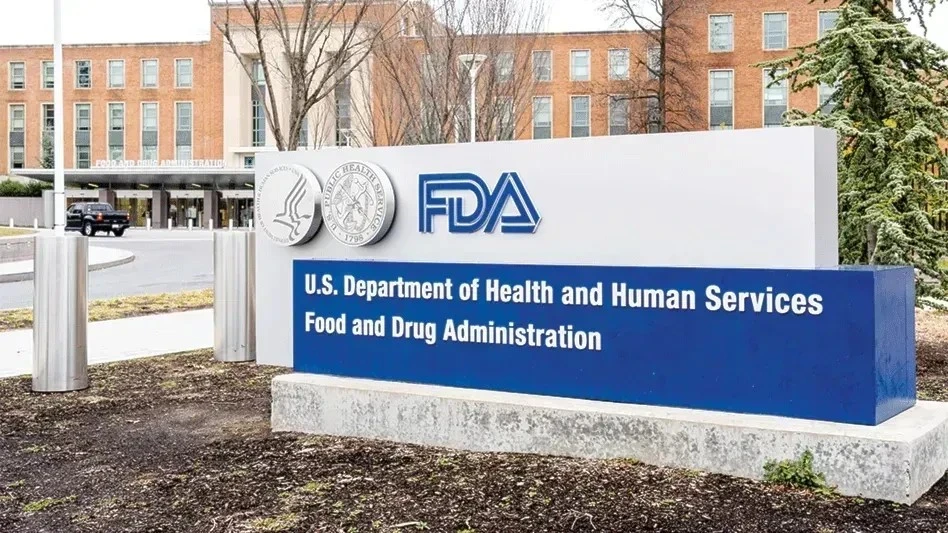
The U.S. Food and Drug Administration (FDA) shared final results from its testing of domestic and imported bottled water collected at retail locations across the U.S. between 2023 and 2024 and analyzed for per- and polyfluoroalkyl substances (PFAS).
Of the 197 samples, which included purified, artesian, spring, and mineral waters, 10 had detectable levels of PFAS. None had levels that would have exceeded the maximum contaminant levels (MCLs) set by the Environmental Protection Agency (EPA) for PFAS if detected in public drinking water.
The FDA tested the bottled water samples for 18 types of PFAS, including the six PFAS for which EPA established MCLs in drinking water. Of the 10 samples with detectable PFAS levels, FDA detected a range of one to four different PFAS in each of the eight domestic bottled water samples, which were either purified or spring water, and a range of one to two different PFAS in each of the two imported bottled water samples, both of which were artesian water.
Four of the PFAS detected were at levels below the EPA MCLs for PFAS in drinking water. Two of the PFAS detected do not have EPA MCLs established.
The FDA previously analyzed for PFAS in bottled water through a limited targeted survey (2016) and through the FDA’s Total Diet Study (TDS) samples. Results from the 2016 survey and TDS testing did not detect PFAS in bottled water samples.
Under section 410 of the Federal Food, Drug and Cosmetic Act, when the EPA establishes new MCLs for public drinking water as part of a National Primary Drinking Water Regulation (NPDWR), the FDA is required to establish a standard of quality regulation for the same contaminants in bottled water or make a finding that such a regulation is not necessary to protect the public health because the contaminant is not present in water used for bottled drinking water. If the FDA does not establish a regulation or make a finding that such a regulation is not necessary, then the levels set by EPA’s NPDWR would be considered the applicable regulation for bottled water. The FDA can take action against bottled water that presents a safety concern even if there is no standard of quality for a contaminant.
The FDA said it continues to analyze bottled water and other foods for PFAS to better estimate U.S. consumers’ exposure to PFAS from foods.
Latest from Quality Assurance & Food Safety
- WHO to Release New Foodborne Disease Estimates for World Food Safety Day
- Ajinomoto Foods Recalls Products Due to Potential Glass Contamination
- Grubhub Introduces Drone-Powered Food Delivery Program
- FSIS Releases 2025 Foodborne Illness Outbreak Investigations Report
- EWG Analysis Flags 111 Ingredients Added to Foods Through GRAS
- FDA Releases Risk Assessment of Foodborne Illness from Produce with Untreated BSAAO
- Catalyst Food Leaders Announces 2026 Virtual Leadership Summit
- FDA to Hold Public Meeting on Dietary Supplements