Adobe Stock | shige_u
The U.S. Food and Drug Administration (FDA) has granted Gardenia Blue Interest Group’s (GBIG) color additive petition to use the color gardenia (genipin) blue in various foods at levels consistent with good manufacturing practice. It is the fourth color derived from natural sources approved by the FDA for use in foods in the last two months.
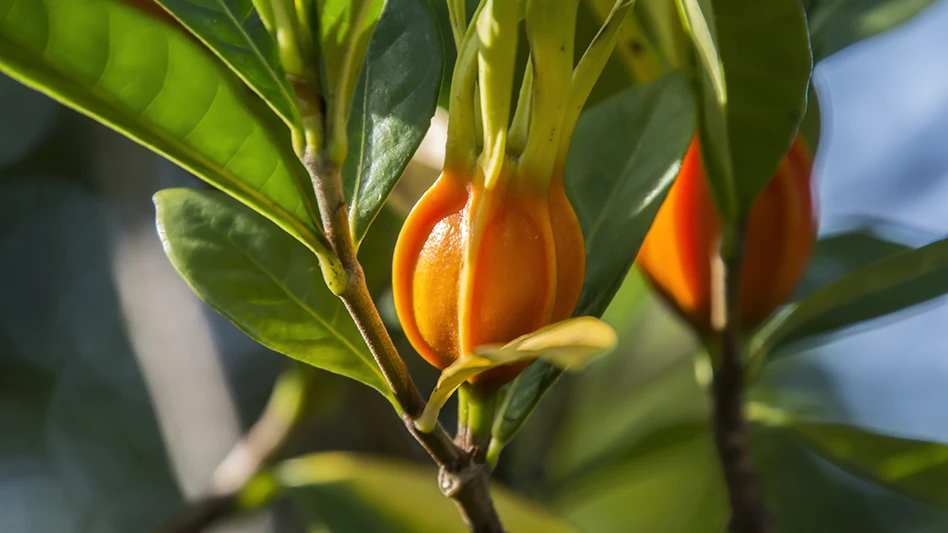
Gardenia blue is derived from the fruit of the gardenia, a flowering evergreen. The FDA has approved the color additive for use in sports drinks, flavored or enhanced non-carbonated water, fruit drinks and ades, ready-to-drink teas, hard candy and soft candy.
“This expedited timeline underscored our serious intent to transition away from petroleum-based synthetic dyes in the food supply,” said FDA Commissioner Marty Makary, M.D., M.P.H. “Now, by expanding the palette of available colors derived from natural sources, food manufacturers have a variety of options available that will make it easier to end their use of petroleum-based dyes.”
The FDA action is in line with U.S. Department of Health and Human Services Secretary Robert F. Kennedy Jr.’s priority to work with industry to phase out the use of all synthetic, petroleum-based dyes from the nation’s food supply as part of the administration’s “Make America Healthy Again” initiative.
“Every day, children are exposed to synthetic chemicals in food that serve no purpose and threaten their health,” Kennedy said. “The FDA’s approval of gardenia blue shows we’re finally putting kids first. Thanks to Dr. Marty Makary’s bold leadership, we’re cutting through industry influence and taking decisive action to make America healthy again.”
Since Kennedy announced a series of measures in April to work with industry to phase out petroleum-based synthetic dyes in food, about 40 percent of the food industry has committed to a voluntary phase-out of such dyes, according to FDA, while other companies, like Mars and Spangler Candy Company, have expressed concern about how natural dyes will change the taste and texture of products long beloved by consumers, like M&Ms and Lucky Charms.
“It’s likely that when we get to the end of 2026 that we will still have products that will still have these artificial colors,” Spangler CEO Kirk Vashaw told Bloomberg in May. “One, there might not even be the supply for these natural colors, and two, we have to do what the consumers want, and it’s not clear to us that these consumers want these natural colors.”
The three colors derived from natural sources approved in May were galdieria extract blue, a blue colorant derived from the unicellular red algae Galdieria sulphuraria; calcium phosphate, a white powder; and butterfly pea flower extract, a blue color that can be used to achieve a range of shades including bright blues, intense purple and natural greens.
Under section 721 of the Federal Food, Drug, and Cosmetic Act, color additives must be FDA-approved before they may be used in foods. The FDA determines whether a color additive is safe to use by considering the projected human dietary exposure to the color additive, the additive’s toxicological data and other relevant information, such as published literature.
Once the FDA approves a color additive, any manufacturer can use the coloring in accordance with the conditions of use.
Accelerating the Phase-Out of Red No. 3
FDA announced July 14 that it had sent a letter to manufacturers encouraging them to accelerate the phase-out of FD&C Red No. 3 in foods, including dietary supplements, sooner than the Jan. 15, 2027, required deadline.
This phase-out was another of the series of measures introduced by Kennedy in April.
“The FDA believes that accelerating the phase out of the use of FD&C Red No. 3 in foods will help further the goal of Making America Healthy Again,” the FDA said in the letter.
Latest from Quality Assurance & Food Safety
- FDA Releases Produce Regulatory Program Standards
- Invest in People or Risk the System: Darin Detwiler and Catalyst Food Leaders on Building Real Food Safety Culture
- USDA Proposes Increasing Poultry, Pork Line Speeds
- FDA Releases New Traceability Rule Guidance
- TraceGains and iFoodDS Extend Strategic Alliance
- bioMérieux Launches New Platform for Spoiler Risk Management
- SafetyChain Receives SOC 2 Type 2 Certification
- Puratos Acquires Pennsylvania-Based Vör Foods