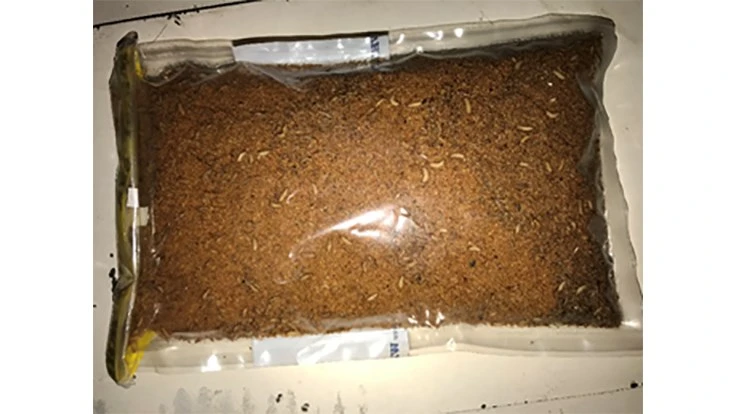
As an integrated pest management consultant, I have been working for more than 15 years with Gary, a contract pest control operator who works very closely with plant sanitation, in one of my pet food client facilities. I recently received an email from Gary with a photo (above) of a Whirl Pak full of product fines containing dozens of warehouse beetle (Trogoderma) larvae and the following explanation:
“These are the kind of infestations we are finding in equipment, slide gates, dead ends of conveyors and on ledges of equipment, on wall and ceiling beams, conduit, and pipes in difficult to access areas. We have been cleaning/treating these areas, which the (pheromone trap) counts are reflecting. It is labor intensive, but effective. It also reduces hundreds of gallons of non-ecofriendly fogging materials from being introduced into the facility. Furthermore, fogging the plant without the extra inspection/cleaning/treating is not showing as effective if you compare to historical trends.”
This example clearly demonstrates the importance of “detail cleaning” to the success of your integrated pest management program (IPM). As Gary describes, the hard-to-reach areas where organic debris accumulates (insect resource sites such as overhead ledges, corners, inside equipment etc.) can become hot spots of insect activity if left unattended. Detail cleaning is not easy; it requires more time and resources than general or aesthetic housekeeping, and it is made more difficult by insanitary design of equipment and facilities.
In my experience working with the various milling industries, I have observed that structural features and food manufacturing equipment that are difficult to access and clean, won’t get cleaned. At least they won’t get cleaned with the right intensity and frequency necessary to disrupt the insect breeding cycle. Gary also points out that detail sanitation leads to reductions in his pheromone trap counts over time. Clearly he relies on monitoring tools to orient sanitation effort toward insect resource sites, and to trend his progress over time (week to week and season to season). Whether or not he is aware of it, this proactive sanitation approach (resource reduction) helps the plant comply with two of FSMA’s most important food protection requirements: continuous improvement and prevention, and one of GFSI’s most strident food protection standards: verification.
Every food processor understands the value of using less intrusive pest control techniques and a reduced dependency on pesticides (described as “more ecofriendly” by Gary). And finally, an organized detail cleaning program also reduces non-productive downtime that results from reactive pest control such as fogging or fumigation. After all, when the plant is shut down and commandeered by the pest control operator to correct an epidemic insect infestation, deep dive sanitation, preventive maintenance, and general plant/equipment re-tooling opportunities are lost.
Photo by Mike Holcomb
Latest from Quality Assurance & Food Safety
- Director General of IICA and Senior USDA Officials Meet to Advance Shared Agenda
- EFSA and FAO Sign Memorandum of Understanding
- Ben Miller Breaks Down Federal Cuts, State Bans and Traceability Delays
- Michigan Officials Warn Recalled ByHeart Infant Formula Remains on Store Shelves
- Puratos USA to Launch First Professional Chocolate Product with Cultured Cocoa
- National Restaurant Association Announces Federal Policy Priorities
- USDA Offloads Washington Buildings in Reorganization Effort
- IDFA Promotes Andrew Jerome to VP of Strategic Communications and Executive Director of Foundation