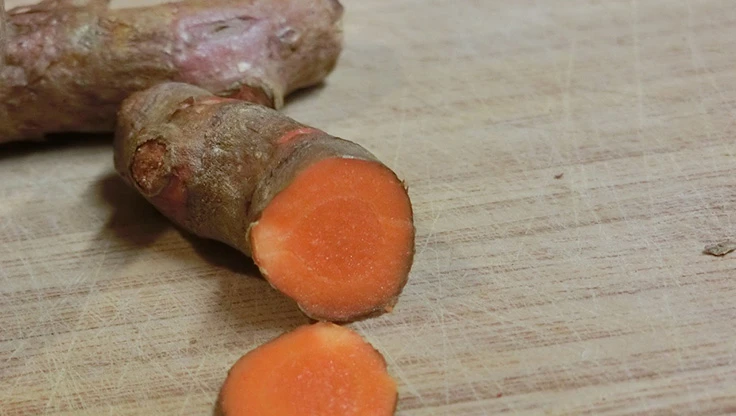
An Indian spice might hold the key to improving the shelf life of fresh produce and even in curbing E. coli outbreaks.
It may sound like something from a futuristic kitchen – countertops, cutting boards and knives that prevent cross-contamination by killing bacteria on contact. Ruplal Choudhary, a food and bioprocess engineer and associate professor in the Department of Plant, Soil and Agricultural Systems at Southern Illinois University Carbondale, is part of a research team looking at applications of the spice turmeric to do just that: to make food-safe, antibacterial surfaces for food processing, preparation and packaging. The team published its early results this year in the “Journal of Agriculture and Food Chemistry.”
Curcumin, the main ingredient in turmeric, forms a phenolic compound – a plant-based chemical compound. This curcumin compound contains naturally occurring properties that make it a powerful antioxidant and anti-inflammatory. This is not news in India, where curcumin is widely used as a medicinal herb. Science, however, has confirmed that the phenolic compounds known as curcuminoids have health benefits and antimicrobial qualities, with initial tests of curcumin to create a food-safe, antibacterial surface finding the phenolic compound to be highly effective against E. coli.
Latest from Quality Assurance & Food Safety
- Director General of IICA and Senior USDA Officials Meet to Advance Shared Agenda
- EFSA and FAO Sign Memorandum of Understanding
- Ben Miller Breaks Down Federal Cuts, State Bans and Traceability Delays
- Michigan Officials Warn Recalled ByHeart Infant Formula Remains on Store Shelves
- Puratos USA to Launch First Professional Chocolate Product with Cultured Cocoa
- National Restaurant Association Announces Federal Policy Priorities
- USDA Offloads Washington Buildings in Reorganization Effort
- IDFA Promotes Andrew Jerome to VP of Strategic Communications and Executive Director of Foundation