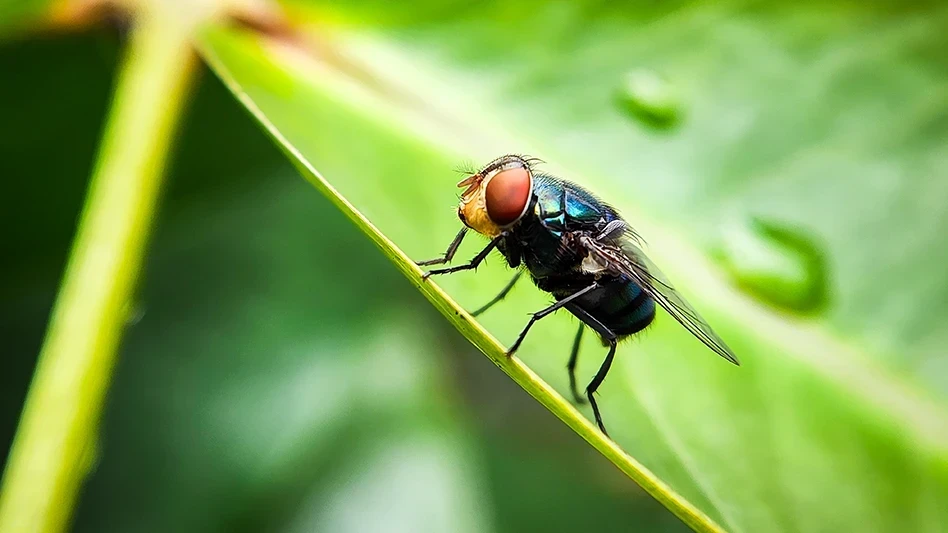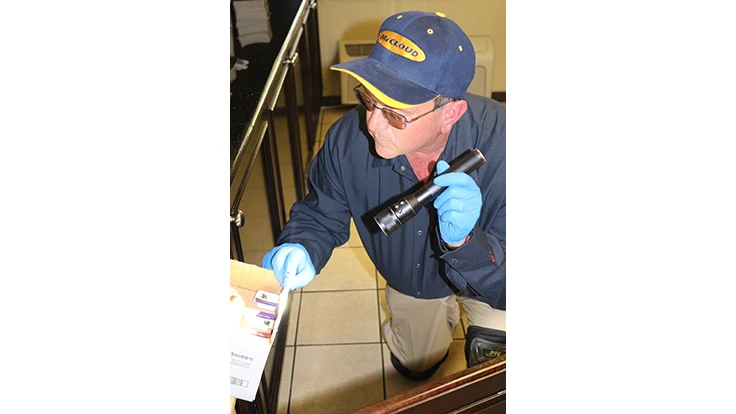
By their very nature, food processing plants attract pests, yet the threshold level for pests in these food facilities is zero. Additionally, the Food Safety Modernization Act (FSMA) increases the stringency of pest management rules and enforcement and the current Good Manufacturing Practices broadened the language to state that pests are not permitted anywhere in a food plant.
However, no matter how knowledgeable, skilled, and well-trained a pest management service technician may be, he or she cannot provide a pest-free environment without the cooperation of the processing facility management and workers. This is because pest management does not begin with the hiring of a pest management firm, rather it begins when a facility site is selected and must continue as part of the facility's operation each and every day.
Because of this, pest management is rather unique in comparison with other professional services, because a partnership, based on mutual accountability, between the pest management professional (PMP) and customer is critical to the program’s success. In fact, while each party has responsibility, "the ownership of the program lies with the food processing facility, and most conditions conducive to pest activity can only realistically be addressed by the facility itself," said Copesan Director of Field Operations and Quality Dominique Sauvage.
This is because, Sauvage explained, a pest management professional can exhaust every control method in the book but a dock door consistently left open, or poor cleaning of product dust, will undermine each one. Additionally, because the technician is not always on site, he or she needs to be able to rely on the food facility to provide information on pest sightings, changes in operation, and any other considerations that may affect pest pressures or monitoring and control strategies.
FSMA's demand for a preventive and risk-based approach to pest management, and successful programs must be built with a combination of exclusion, sanitation, and habitat modification: conventional control strategies and monitoring; and communication and teamwork. As such, six standards for the food facility's role in the pest management partnership are:
- Minimize exterior pest attraction to the facility through sanitation (including frequent dumpster pick-up and cleaning); habitat modification (removing flowering plants, trees, mulch, standing water); and lighting that is set away from the building so as to not attract flying insects.
- Keep pests from coming in by make exclusion a priority and investing in having it done correctly. "This means sealing gaps, holes, and penetrations with appropriate materials that will remain effective for years," Sauvage said. Additionally, doors must be kept closed when not in use and be fitted with high-quality pest-resistant sweeps. Keeping positive air pressure in the facility will prevent small insects from being sucked inside, and air curtains can prevent larger flies from entering.
- Reduce survivability of pests that do get in by decreasing the availability of food, water, and harborage sites. Decrease relative humidity and temperature. Practice FIFO and stock rotation, and remove products, ingredients, and equipment for which you have no plans for use.
- Allow time and access. Give your PMP access to secure areas, and allow for next-generation IPM inspection time to check pest-vulnerable areas at each service. Because accountability must be owned at the highest level of an organization, it is critical to allow and assist the PMP with access to strategic decision makers when needed to resolve an issue. It’s not that executives don’t want to do the right thing, but they often don’t know what the right thing is or were not made aware of a situation.
- Communicate. Be sure to inform the PMP of hot-button issues specific to the facility that will help him or her provide effective inspection and control. Show and discuss difficult-to-clean areas and equipment, and keep the PMP informed of any plans for facility additions or remodels, new production lines, new products, new use of an off-site warehouse, etc. Encourage open communication from your pest management provider and welcome their risk assessment.
- Make your pest management professional a part of your team. Involving the service technician in internal inspections and training on food safety and production processes will improve your pest management program.
Both the pest management professional and the food facility have knowledge and expertise that needs to be shared with the other, Sauvage said, adding, "When the PMP fully understands the relevant intricacies and concerns of the operation, the quality of service is limitless." By ensuring that everyone is on the same page, understands the pathway to success, and takes accountability, the food facility/pest management partnership will strengthen both sides.
Learn more about Best Practices in Food Processing & Distribution Centers at https://mccloudservices.com/industries/food-industry/food-processing/.
Latest from Quality Assurance & Food Safety
- FDA Releases Produce Regulatory Program Standards
- Invest in People or Risk the System: Darin Detwiler and Catalyst Food Leaders on Building Real Food Safety Culture
- USDA Proposes Increasing Poultry, Pork Line Speeds
- FDA Releases New Traceability Rule Guidance
- TraceGains and iFoodDS Extend Strategic Alliance
- bioMérieux Launches New Platform for Spoiler Risk Management
- SafetyChain Receives SOC 2 Type 2 Certification
- Puratos Acquires Pennsylvania-Based Vör Foods