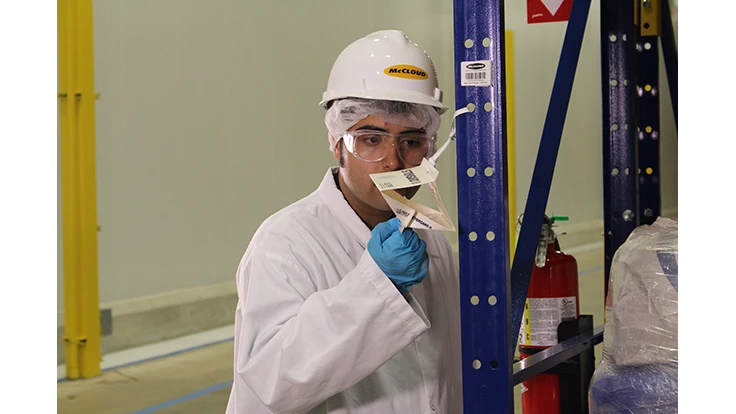
As all those in food processing know, it is a complex industry with very specific standards and regulations. As such, it is critical that vendors who service the industry be as knowledgeable about the processes, procedures, and tools of the food industry as they are about their own – and that requires very specific training.
Industry training is critical for pest management professionals (PMP) who service food-processing facilities, because it is the foundation upon which they can hone their craft. "Good training provides a comprehensive overview of what factors and services should be considered when conducting pest management services in food facilities," said National Pest Management Association (NPMA) Chief Entomologist & VP Technical and Regulatory Affairs Jim Fredericks.
The food and the pest management industries are continuously evolving, so it is important that technicians continue to learn new practices and procedures through training to ensure they provide the most effective service possible to support and enhance the food facility's food safety efforts. "Training is a continuous process and the repetition that comes from it enhances a PMP’s capabilities," Fredericks said, adding that continuous training is also a requirement under the Food Safety Modernization Act (FSMA) and current Good Manufacturing Practices (cGMPs).
Not only can pest problems change quickly, requiring constant monitoring and documentation, but no two food facilities are exactly the same in potential pest issues or in internal policies to which the PMP must strictly adhere. Because of this, there is no “one-size-fits-all approach” to pest management in food facilities. Rather, Fredericks said, "There are a lot of factors that need to be considered and addressed, and being prepared to accept the challenge and adapt is the only way to be successful in managing pests in food processing facilities."
All that said, there are some standards on which every PMP should be trained and prepared for in food facility service, the most basic of which, of course, is the knowledge of pests and their control within the complexity of the food processing environment. To enable effective control, the PMP needs to have specialized training in general food safety knowledge, worker safety, regulations, third-party audit standards, food plant processing systems and equipment, and specific corporate policies and procedures.
Because of the PMP's scope of work within the food facility, food safety and worker safety training can generally be completed in online, individual learning, or classroom settings. The pest management skills, however, should be introduced with field visits supplemented with classroom talks, online modules, and/or reading. The site visits will serve as the new employee’s first exposure to the new job, and familiarize him or her with the food processing industry in general areas such as customer interaction, hazard analysis of the facility, general GMPs and steps taken to maintain food safety. The technician also will get hands-on experience in the inspection process, reading/reviewing the pesticide label, and pesticide mixing and application under the tutelage of a manager or experienced PMP.
Once the trainer feels the new PMP is ready, she or he can introduce the PMP to the food facilities at which he or she will provide service. Together they can inspect the plant, discussing the specifics of that facility, such as the potential pests typical of that type of plant; possible pest harborage areas (e.g., inside equipment and other pest vulnerable zones) and specific areas of concern; devices used in that facility to monitor and/or control pests; and specific practices and policies of that company, including any personal protective equipment to be used per facility requirements.
The new technician also will get the chance to meet with his key contacts, answer any questions they may have, and learn of subtle facility-specific nuances. Such introductions are vital so that both parties have confidence in the new partnership.
This should never signal the end of training for the service technician, however. Not only is continuing education important for all technicians, no matter their years of experiences, but the new service professional will need to continue the initial training as different skills are required and various environments encountered. The process should take at least 30 days, often as long as a year, with coaching and evaluations along the way.
While each pest management service provider will have its own specific training program, there are some industry standards with which every technician should be familiar. A good overview of these is available in the NPMA's recently revised Pest Management Standards for Food Processing and Handling Facilities (available at http://bit.ly/2mep6e2), with a study guide and online test to be launched in July. Technicians who successfully pass the test, which covers new requirements under FSMA as well as the NPMA standards, will receive a certificate, providing training documentation for the food facility and third-party auditors.
Entering any new career will pose challenges, but proper training will help to reduce the learning curve, identify and mitigate potential challenges, and ease new technicians into their new role, enabling them to develop the professionalism, confidence, and skill to handle the pest situations that come their way.
"Pest management in the food processing industry is dynamic as it is always changing and is different based on the facility being serviced," Fredericks said. "To be effective, a PMP must also be dynamic and be able to develop a program that addresses the unique aspects of each individual facility."
Latest from Quality Assurance & Food Safety
- FDA Releases Produce Regulatory Program Standards
- Invest in People or Risk the System: Darin Detwiler and Catalyst Food Leaders on Building Real Food Safety Culture
- USDA Proposes Increasing Poultry, Pork Line Speeds
- FDA Releases New Traceability Rule Guidance
- TraceGains and iFoodDS Extend Strategic Alliance
- bioMérieux Launches New Platform for Spoiler Risk Management
- SafetyChain Receives SOC 2 Type 2 Certification
- Puratos Acquires Pennsylvania-Based Vör Foods