Kellanova
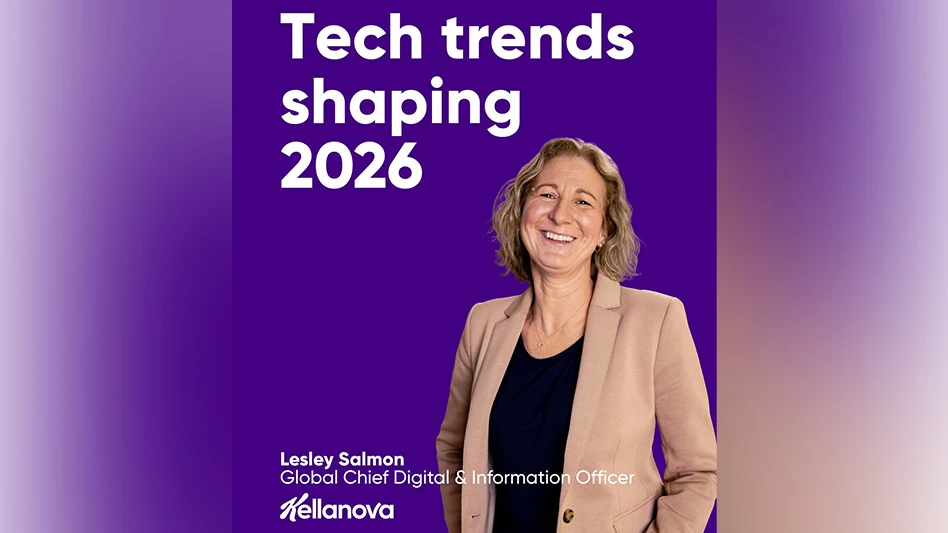
CHICAGO – Technology is redefining what it means to be a consumer goods company, said Kellanova's Global Chief Digital and Information Officer Lesley Salmon.
Digital transformation is no longer about modernization — it's about reinvention, said Salmon. From AI that fuels creativity to connected systems that enhance sustainability, the convergence of technology and human ingenuity is reshaping every part of the consumer packaged goods (CPG) ecosystem.
Salmon said she sees this as the great unlock: technology as a growth catalyst — connecting insight to action, purpose to performance and innovation to impact.
Here are Kellavona's five tech trends transforming the CPG landscape in 2026 — and how Salmon said Kellanova is embracing them.
1. Call my agent!
Agentic AI can analyze real-time data, make recommendations and even execute actions without direct human intervention, leading to faster decision-making and greater operational efficiency, said Salmon. As these AI "agents" become integrated into CPG workflows, companies are using them to automate repetitive tasks, streamline cross-departmental processes and respond predictively to market fluctuations.
Widespread adoption frees employees for higher-value strategic work while enabling organizations to react with unprecedented speed and precision, said Salmon.
"In 2026, we'll see advanced algorithms driving even greater efficiency across supply chain management, demand forecasting, and inventory control," said Ramesh Kollepara, Kellanova's global chief technology officer. "AI-powered personalization will allow brands to create tailored experiences that deepen engagement and loyalty. Machine learning will continue to transform product innovation — helping us anticipate consumer needs, spot emerging trends faster, and make smarter decisions. And with the responsible application of Agentic AI, we're unlocking new levels of agility, cost efficiency and adaptability in an ever-changing market."
2. Advanced Analytics & Deeper Consumer Insights
The explosion of data from digital touchpoints is empowering brands to understand consumers like never before, said Salmon. Advanced analytics can provide deeper insights into preferences, behaviors and trends — turning data into actionable intelligence.
"Through data-driven marketing, we're unlocking sharper segmentation, smarter campaigns and stronger ROI. Partnering across the business, we've built a market-leading capability, called 'RGM Navigator' that is powered by trusted data products and AI/ML models, providing optimized pricing and promotion insights, strengthening," said Loretta Franks, Kellanova's chief data & advanced analytics officer.
This approach delivered a $1 incremental GSV return for every dollar spent by the Kellanova Marketing Fund, while increasing trade investment, said Salmon. Advanced algorithms determine which products to promote, when, how deep to discount and for how long. As a result, salty snack promotions became 91% more effective from 2024 to 2025, said Salmon.
3. Connected Commerce: The Seamless "Phygital" Experience
Consumers no longer distinguish between digital and in-store — they expect a seamless journey across channels, said Salmon. Connected commerce, or "phygital" experiences, bridges physical and digital touchpoints.
"The future of retail is connected," said Charisse Hughes, Kellanova's global chief growth officer. "We're building ecosystems where physical and digital experiences work together — from interactive packaging that links to digital content, to data-driven in-store engagement."
4. Smart Supply Chains: Visibility That Builds Trust
In today's unpredictable environment, resilience is the new currency, said Salmon. Digital intelligence —powered by IoT sensors, predictive analytics and blockchain — redefines supply chains.
"Our goal is a supply chain that's not just efficient, but smart and resilient," said Rodrigo Lance, SVP of Kellanova's Global Supply Chain. "By connecting data from sourcing to shelf, we can anticipate disruptions, improve transparency, and serve consumers with greater speed and reliability."
Smart supply chains also build consumer trust, enabling product traceability, verifiable sustainability claims and more informed purchasing decisions, said Salmon.
5. Sustainable Tech: Innovating for People and Planet
Sustainability and technology are now inseparable, said Salmon. Advances in data analytics, materials science and packaging innovation are accelerating CPG's transition toward a circular economy.
"As a digitally driven, technology-forward organization, we're embedding sustainability into every stage of our innovation pipeline," said David Lestage, Kellanova's chief R&D officer. "Whether it's optimizing energy use in manufacturing or applying AI to food and packaging design to evaluate more sustainable ingredients and material choices, we're demonstrating that what's better for the planet is also better for business."
Latest from Quality Assurance & Food Safety
- Chef Robotics Introduces Pat-Down Capability for Meal Presentation and Sealing
- USDA Launches Regenerative Pilot Program
- Indoor Ag-Con Adds Food Safety Track to Conference Lineup
- IDFA Recognizes Federal Officials for Support of U.S. Dairy Industry
- Tetra Pak Acquires Bioreactors.net
- Fresh Del Monte Receives Rabobank Leadership Award
- São Paulo Earns Guinness World Record for Largest Municipal Food Security Program
- KPM Analytics Releases Ready-to-Use NIR Calibration Packages