EatSafe
In 2015, the World Health Organization reported that over 400,000 people died annually from foodborne diseases. In 2018, the World Bank estimated that food safety costs $110 billion a year in lost productivity through illness and health costs, with sub-Sahara Africa affected the most. But more reliable and current data is needed.
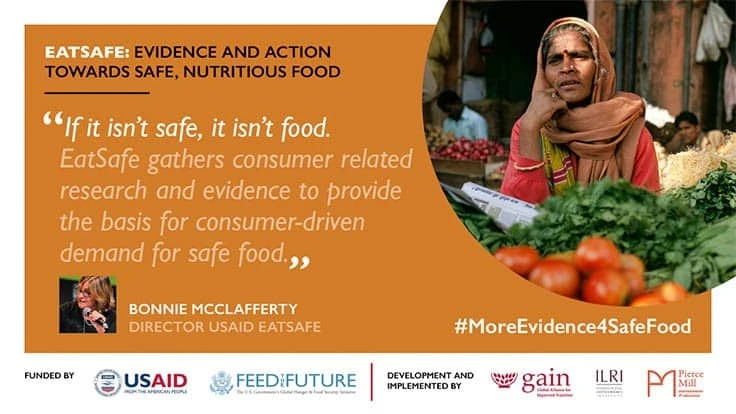
"The human and financial costs of poor food safety are appalling yet it is being widely ignored," McClafferty said. "That has to change and we need to take action now to achieve better health outcomes for the 600 million people who each year get sick from unsafe food.
"We need to build a solid understanding of consumer values and perceptions so we can learn how we can foster a vendor- and consumer-led change. In parallel, we need to implement food safety governance and surveillance where often there is none at all while developing the capacity and infrastructure for change.
"We're calling on governments and donor groups to provide resources for further research so that evidence-based decisions about food safety measures in traditional markets, to ensure safer foods."
EatSafe has also launched the initial findings of its research into operations at traditional markets in Bangladesh, Kenya and Nigeria, based on over 2,000 vendors and consumer interviews. Vendors are in favor of better COVID-19 safety practices, while consumers find them difficult to maintain. However, consumers have been making greater use of mobile money and shopping trips have been shorter and closer to home. There has also been an increase in cleanliness, particularly handwashing.
The panel's experts also weighed in:
Nasser: "Without food safety, there is no food security. The basics already started during the pandemic should be continued, like hand hygiene and cleanliness."
Ogunmoyela: "We need to rebuild traditional markets and make sure policies embrace them by upgrading facilities. And consumers must be given a voice in shaping the markets."
Prakash: "We have to empower traditional markets to use technology to connect with consumers. It is becoming the preferred mode of commerce for the youth. Street vendors beginning to accept digital payments is a great first step in that direction."
Latest from Quality Assurance & Food Safety
- FDA, CDC Investigate Salmonella Outbreak Linked to Live It Up Dietary Supplement Powder
- USDA FSIS Announces New Deputy Administrator of Field Operations
- ProVeg Incubator Launches Fast-Track to Impact Program for Alt-Protein Startups
- Kerry Releases 2026 Global Taste Charts
- FDA Shares Australia Certificate Requirements for Bivalve Molluscs and Related Products
- FDA Announces Update from CFIA on Certificate Requirements for Certain Meat, Poultry Products
- NIMA Partners Introduces the Next-Generation NIMA Gluten Sensor
- IFT to Host Community Conversation on Dietary Guidelines for Americans, 2025-2030 Report