It was a typical lunch break — until a scream cut through the air. A woman had collapsed near the building entrance. Most people froze. A few turned away. But Kris Newton ran.
“It wasn’t even a question,” she recalled. “My instinct was to help her, gather her things, assess the situation. Everyone else just stood there. But the middle of a crisis isn’t the time to figure things out.”
That response — the ability to act under pressure — is more than instinct. It’s muscle memory. As a former U.S. Air Force military police officer and paralegal, Newton was trained for unpredictability. That training never really leaves you, she said — and it’s exactly what she brings to her current role in food safety.
Now a business development manager at Mérieux NutriSciences — a global company specializing in food safety, quality and sustainability testing, consulting and training services — Newton works closely with clients across the food industry, especially in moments of high stress: product recalls, traceability challenges and crisis response.
“I don’t enjoy the stress,” she said. “I’ve just prepared for it. That’s what training is for.”
FROM THE FRONT LINES TO FOOD SAFETY
Newton joined the Air Force in 1994, just as women were being integrated into security police (the military’s version of law enforcement). She was 18 years old, had never handled a weapon and suddenly found herself armed, patrolling an Air Force base with a 9 mm on her hip.
Though she originally joined for the GI Bill (a package of education benefits for service members to pay for college) with dreams of becoming a scientist, her path first took her through law enforcement and legal work. Later, Newton transitioned into food safety, where she has built a career spanning more than 15 years. The values and training from her military service remain tightly woven into her professional ethic.
“The food industry is the only other industry I’ve worked in besides the military that uses Standard Operating Procedures — and it’s a beautiful thing,” she said. “SOPs aren’t bureaucracy. They’re survival tools.”
MUSCLE MEMORY IN A CRISIS
As a former food safety consultant with Matrix Sciences and Savour Food Safety International, Newton guided companies through recalls and compliance crises. One of her biggest frustrations? Simulations that don’t test anything real.
“One client chose to recall an ingredient used only in a seasonal item — something made two months a year,” she said. “That’s not a test. That’s a check-the-box exercise.”
True preparedness, she argued, means planning for disruption, not convenience.
“Recalls don’t happen Tuesday morning when your full team is in the office,” said Newton. “They happen Friday at 5 p.m. or when your QA manager is flying overseas. That’s the point: you have to be ready when it’s inconvenient.”
Her perspective draws directly from her military experience. While serving in the Air Force, Newton once secured the scene of a fatal plane crash and responded to a murder-suicide on base. Both incidents left lasting impressions — not only for their emotional weight, but for how her team performed under pressure.
“You don’t always see the value of training when you’re doing it,” she said. “But when the moment comes, your body just reacts. That’s muscle memory. That’s why we train.”
Kris Newton, business development manager at Mérieux NutriSciences, joined the U.S. Air Force in 1994.
Photos courtesy of Kris Newton And Darin Detwiler
WHAT VETERANS BRING TO THE TABLE
Veterans like Newton offer more than crisis instincts. They bring team discipline, accountability and operational clarity. These are qualities every food company says it wants, especially in safety-sensitive roles.
A 2018 report cited by the National Restaurant Association Educational Foundation estimated that more than 250,000 veterans were working in the U.S. food industry. Nearly one in five veterans employed in restaurants held management positions, almost double the rate of non-veteran peers.
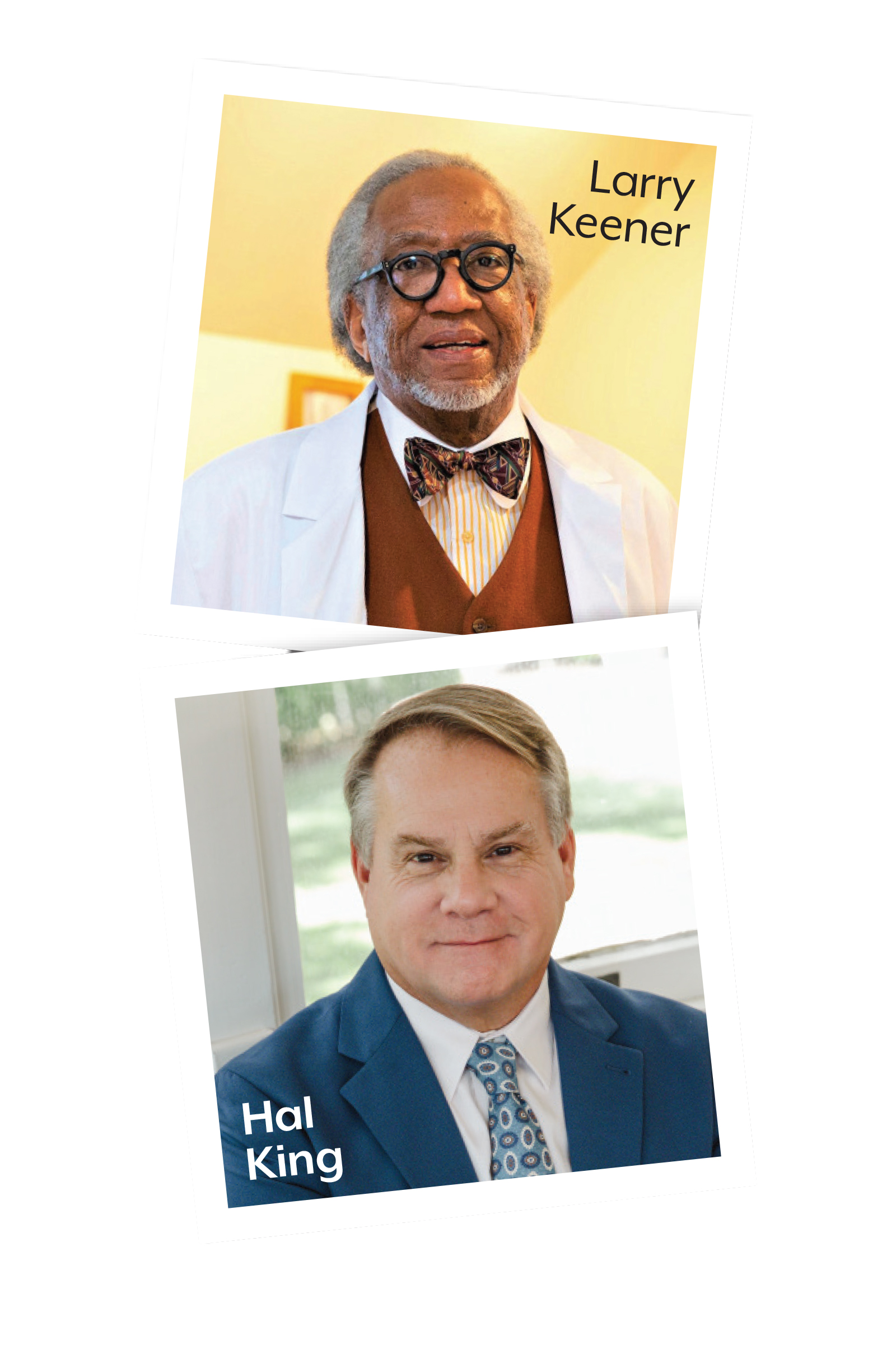
“Military veterans do so well in food safety because of their chain-of-command training and mission focus,” said Hal King, a food safety expert, U.S. Army veteran and former commander in the U.S. Public Health Service (a branch of the U.S. Department of Defense). “Each member understands their role, is trained to execute it with precision and is accountable for the outcome. That’s exactly what food safety demands.”
Newton agreed: “While I trust my whole team, there’s an instant trust when I meet another veteran. You know they’ve been trained, that they’ve had to operate under stress and that they’ve had to rely on others to survive. That doesn’t go away.”
Larry Keener, president and CEO of International Product Safety Consultants and former director of product safety and regulatory affairs at Unilever, served as an Army medic during the Vietnam War. While food safety was not his primary mission, he did review the SOPs and practices related to food handling, storage and service. His studies in parasitology, hematology, sanitation, water sourcing and disease control translated well into his decades-long career as a food safety scientist.
“There was no better teacher of leadership than the U.S. Army during my time of service,” Keener said.
MISSION: PUBLIC HEALTH
Even outside of military settings, Newton finds herself on alert. She still avoids sitting with her back to the door in restaurants. At the beach or pool, she scans for people in distress, though she’s never been a lifeguard.
“It’s just how we’re wired,” she said. “Always watching, always ready to respond.”
Now completing her master’s degree in food safety at Michigan State University, Newton sees her role as a continuation of service: a mission with public health at its core.
“Food safety may not involve weapons or war zones, but it demands vigilance,” Newton said. “When people get sick from contaminated food, it’s not just a company issue: it’s a public trust issue. We have to be ready.”
CHANGING THE NARRATIVE
Many veterans remain invisible within the workforce. Newton recalled a moment at a recent food industry conference where a magazine editor casually told her veterans “weren’t a notable part of the sector,” she said. Rather than push back, she quietly reached out to veteran colleagues attending the event and encouraged them to stop by the booth.
“One by one, they showed up,” she said. “QA leads, supply chain managers, food scientists — every one of them a veteran. The editor’s expression said it all: he just hadn’t seen us.”
That moment underscores the broader need for representation and visibility, not just as a matter of recognition, but as a way to tap into proven leadership.
“Veterans don’t ask to be celebrated,” Newton said. “We just want to serve, to be part of something bigger and to be trusted to lead when it matters most.”
For Newton, food safety isn’t just a job. It’s a mission.
“Training and culture go hand in hand,” she said. “If you don’t have strong training, you won’t have the right culture. And without that culture, you won’t know what to do when the worst happens.”
She often returns to a line from the movie “The Incredibles”: “Luck favors the prepared.”
For veterans working in food safety, that ethic is a kind of second service — less visible, but no less vital. Countless veterans lead teams against invisible threats to our food supply, serving in every link of the supply chain, from farms to labs to boardrooms. The uniforms may no longer be worn, but the mission remains: Protect, respond and be ready when it counts.
Editor's Note: Click here to listen to Darin Detwiler's podcast interview with Kris Newton, where they further explore how military discipline translates into food safety leadership.
Dr. Darin Detwiler is a veteran of the U.S. Navy and founder and CEO of Detwiler Consulting Group. Editor’s Note: Citations for this story are linked in the digital edition at qualityassurancemag.com.