Editor’s Note: As the recently enacted Food Safety Modernization Act takes effect, it will impact all segments of the industry—both immediate and long-term. To bring an understanding of the provisions of the legislation and keep you updated on its impacts on you, we have invited QA Advisory Board Member and past FDA Commissioner, Dr. David Acheson, to host a regular column on the new regulation. Following is the first in the series.
The signing of the Food Safety Modernization Act represents the most significant overhaul to the U.S. food safety system in over 70 years. The new legislation provides additional authorities to FDA and will require all parties in the food supply chain to pay attention to likely changes, although the impact on some components will be much greater than on others. The final version included much less specificity than previous versions and much of the impact will depend on how FDA promulgates regulations and if Congress provides FDA with the resources needed to successfully implement all the provisions.
The new legislation is based on understanding of risks and hazards, then controlling them, and thus has an emphasis on prevention with provisions taking effect over a number of years. There are, however, four key provisions that took effect immediately. Following are the four and what they mean to you.
Records Access. Previously, FDA could only access records relating to articles of food believed to be adulterated. Under the new law, if there is a reasonable belief that a product is adulterated, FDA can request access to records relating to other food handled by the facility.
This means that all records related to the manufacturing, processing, packing, transportation, distribution, receipt, holding or importation of an article of food for which there is a reasonable probability that exposure will cause serious adverse health consequence or death and all records relating to any food that is likely to be affected must be provided to FDA upon request.
While the provision gives FDA more access to records, there still has to be a reasonable belief that a food will cause a serious adverse health event or death, and exactly how that is defined will be important.
Increased Inspections. The new legislation includes increased inspection frequencies for all registered facilities, that is, any factory, warehouse or establishment that manufactures, processes, packs or holds food. This includes both domestic and international facilities, and foreign firms that refuse an FDA inspection may not be allowed to import product into the U.S.
While inspection resources are to be targeted toward high-risk facilities, the legislation specifies that:
- Domestic high-risk facilities must be inspected at least once in the first five years and at least once every three years thereafter.
- Domestic non-high risk facilities must be inspected at least once in the first seven years and at least once every five years thereafter.
Thus, in 2011, FDA must inspect at least 600 foreign facilities, then double that number every year compared with the previous year for the next five years. This means that FDA has to inspect 600 foreign facilities in 2011 and increase to 19,000 in 2016.
With current resources, however, it is nearly impossible for FDA to meet inspection frequencies. The agency will likely look to other federal, state or local inspectors for assistance in domestic inspections, and third party auditors for foreign facilities. The law also authorizes FDA to enter into agreements with foreign governments for inspection. This provision impacts all facilities required to register under section 415 of the Food, Drug and Cosmetic Act (FD&C Act). Although the current definition exempts farms, restaurants, and retail facilities, FDA must now define on-farm packing, holding, manufacturing and processing, and exempt only those defined as low-risk.
Recall Authority. In the past, FDA had little recourse if a firm refused to recall product. Now, FDA can require a man recall of product for which there is a reasonable probability that it is adulterated or misbranded and will cause a serious adverse health consequence or death.
The responsible party must be given an opportunity to voluntarily cease distribution and recall the product. But if this is not heeded, FDA can order immediate cease of distribution.
FDA will then provide an opportunity for an informal hearing within two days. If the hearing confirms the necessity of the recall, FDA will establish a timeframe and require periodic reports. Failure to comply could result in civil penalties. If it is determined that the recall is not necessary, FDA will vacate or modify the order.
The provision impacts all facilities subject to FD&C Act Section 415 registration, and fills a gap in the current FDA authority that will likely be rarely needed, as most companies comply with voluntary recall, but will provide much faster and easier recall if needed.
Import Certifications. Based on the known safety risks associated with a food and/or the country, territory or region in which it originates, FDA may require that imported food be certified to ensure compliance with U.S. laws.
Certification can apply to a specific shipment or to a facility that manufactures, processes, packs or holds product. It can be required if the food safety programs of the country, territory or region of origin are found to be inadequate to ensure that food is as safe as a similar domestic food.
This means that entry into the U.S. may be delayed until certification is obtained if it is determined that certification is required.
This new authority potentially gives FDA a great deal more leverage against imported high risk foods. How FDA defines high risk will be important, but will likely include those foods or countries with a history of problems. This will likely take a little while to gain full effect, despite the immediate authority, but we may see it being used fairly soon for selected foods.
Dr. David Acheson is Managing Director, Food and Import Safety Practice, at Leavitt Partners (www.leavittpartners.com). From 2002-2009, Dr. Acheson was with the U.S. Food and Drug Administration in a variety of positions culminating as Associate Commissioner for Foods, prior to which he was active as an internist and in academia, with a specialization in foodborne illness. Dr. Acheson can be reached at dacheson@gie.net.
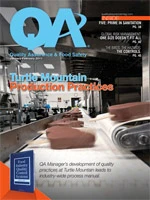
Explore the February 2011 Issue
Check out more from this issue and find your next story to read.
Latest from Quality Assurance & Food Safety
- FDA Releases Produce Regulatory Program Standards
- Invest in People or Risk the System: Darin Detwiler and Catalyst Food Leaders on Building Real Food Safety Culture
- USDA Proposes Increasing Poultry, Pork Line Speeds
- FDA Releases New Traceability Rule Guidance
- TraceGains and iFoodDS Extend Strategic Alliance
- bioMérieux Launches New Platform for Spoiler Risk Management
- SafetyChain Receives SOC 2 Type 2 Certification
- Puratos Acquires Pennsylvania-Based Vör Foods