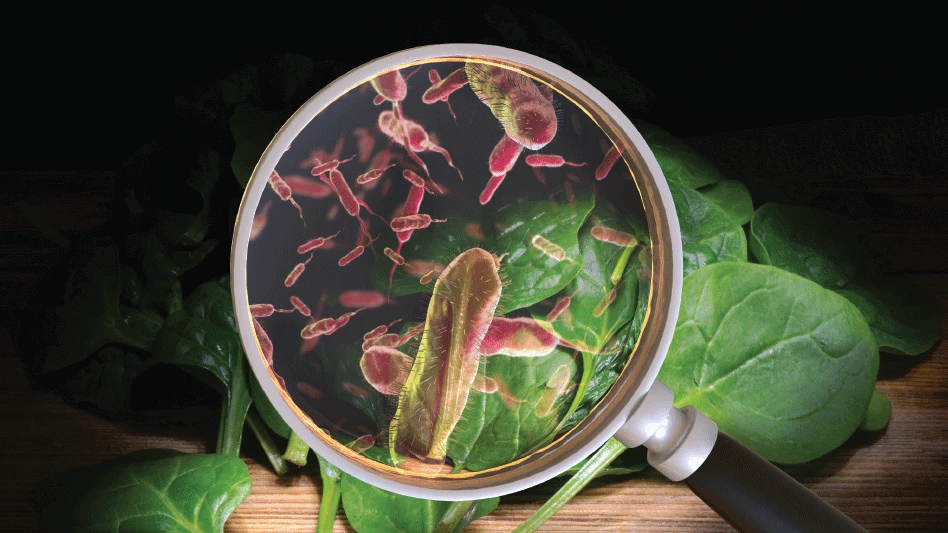
© Giovanni Cancemi | Adobe Stock
Editor's Note: This article originally appeared in the May/June 2025 print edition of Quality Assurance & Food Safety under the headline “Recall Ready.”
The landscape of the food industry has drastically changed in the past few decades, and many of these changes are owed to the advent of a globalized supply chain. With factors such as allergenic and bacterial contamination risks and labeling corrections becoming increasingly prevalent in food products, developing an effective food recall plan has more significance than ever before.
Food recalls are necessary when food products in the supply chain or with consumers are deemed in violation of the standards set forth by the U.S. Food and Drug Administration (FDA) and/or the U.S. Department of Agriculture (USDA) and need to be removed from circulation. This process is crucial to protecting public health and ensuring fair trade through elimination of misbranded food items. Recall procedures can be elaborate, involving multiple stakeholders throughout the supply chain across various countries or even continents.
Between the years of 2020-2023, the number of food recalls in the United States increased from 454 to 547, an increase of over 20%, with nearly 40% of recalls being initiated due to allergen contamination, followed by bacterial contamination (at 21.1.%), according to Traceone.
In light of these concerns, how does an organization ensure that it is prepared for the hypothetical scenario of a recall? Roger Hancock, CEO of Recall InfoLink and a leading expert in recall procedure with over 31 years of experience in public health, said that recall readiness is simply a matter of being prepared for the unexpected.
“Being recall ready means that you have a plan, that you’ve practiced that plan, and that you’ve identified and practiced that plan with your trading partners so that you can identify where gaps are and where improvements can be made,” he said.
Having worked with major retailers throughout the United States, Hancock described why a recall is considered such an important procedure in the food industry.
“Recall is the name that people most readily put to the business process of removing product from the supply chain,” said Hancock. “There are lots of reasons why product can be removed from the supply chain. Food fraud is one of them. Contamination is another one. Foreign material is another one.”
How does an organization ensure that it is, in fact, recall ready? Hancock shared his insights into how companies can prepare for scenarios by developing an effective food recall plan.
REVIEW RECALL PLANS INTERNALLY.
Conducting an in-depth review of an organization’s food recall plan is the first step towards recall readiness.
“Get your plan off the shelf, dust it off and review it to make sure that it’s clear,” said Hancock.
Collaborating effectively with all internal departments as well as external vendors is essential and should be reflected in the food recall plan — this includes practicing the plan, as well, said Hancock.
Reviewing food recall plans to reflect the realities of an organization’s on-the-ground supply chain and communication methodologies can go a long way to ensure that an organization can truly become recall ready. These reviews should ideally be conducted by a comprehensive recall team consisting of members from all relevant departments within the organization, said Hancock, including QA specialists, communication specialists and purchase department heads.
TRAIN EMPLOYEES EFFECTIVELY.
A crucial point that is generally swept under the rug regarding recall procedure is the reality that most recall team members may not have enough training in the proposed food recall plan to execute it when required.
“Confusion is the enemy of a well-done recall,” said Hancock. “And if I get a message, but I don’t know what to do, that [can] interrupt the whole recall process. People have to know what it means, because if they’re confused, it’s not going to go very far.”
Scheduling hands-on training in recall procedure and how to execute it effectively as a regular business activity can help eliminate fears or anxieties that employees may have when faced with an actual recall — because, as Hancock puts it, “the risk of not doing your recall well means your brand is going to be damaged. And, unfortunately, it means that people could get sick or even die. The cost of doing nothing could be extraordinary.”
INVOLVE INTERNAL AND EXTERNAL STAKEHOLDERS.
Involving an organization’s complete supply chain, including internal and external vendors, is crucial to ensure that the recall plan in place does, in fact, work.
A common misconception within the food industry is traceability and recall being indistinguishable from one another; although there is an overlap, traceability refers to internal data within an organization, as compared to recalls, which involve your entire supply chain, including external vendors such as distributors and wholesalers, said Hancock.
“It’s a very multifunctional process,” he said. “Being comprehensive in your view and bringing those people together and actually practicing is what we find is the most important part. And when you practice, include vendors, customers [and] your external trading partners.”
Executing mock recalls that involve your entire supply chain has the added advantage of transforming a potential recall into an important business process rather than a crisis management exercise.

COMMUNICATION IS KEY.
Arguably the most vital factor in recall readiness, communication methodologies are key to executing an effective recall.
Firstly, there needs to be an effective communication line between the competent authority and recalling food business. Recall information can be accessed by consumers through various channels such as enforcement reports, public warnings and FDA subscriptions.
How does an organization ensure effective recall information communication? Considering many factors involving your food recall plan when constructing communication strategies could be a worthwhile endeavour, said Hancock.
“Specifically, you have to be aware, who are my customers? What are the products I’m recalling? How am I going to communicate to my customers? What are the regulations I have to follow?” said Hancock. “Maybe my customers aren’t speaking the same language that I’m speaking.”
Despite recalls taking center stage in the food safety landscape, there are, unfortunately, gaps in productive communication methods used by the food industry.
“I see a lot of room at the consumer level to tighten up communication to prevent confusion,” said Hancock.
He suggested remedies rooted in company-specific technology, “using better technology, loyalty cards and in app-opportunities to notify people and give them specific messages, [and/or] customize the message for the consumer,” he said.
Another often overlooked issue is the simple question of whether consumer details are valid. Invalid details can result in detailed communication strategies ultimately becoming futile, said Hancock.
“If you don’t have current contact information, you can have great messaging, but it doesn’t go anywhere because you can’t reach the people that need to receive it,” he said.
CONSIDER REGULATORY IMPACT.
With the possibility of regulatory changes on the horizon for agencies such as the USDA and the FDA, it’s important to consider what this would mean for recall readiness. According to the Human Foods Program, which oversees all food safety activities related to the FDA, recall modernization is a top priority for fiscal year 2025.
“And the USDA also has told me that they’re doing a review of their recall process from top to bottom,” said Hancock. “However, there’s a lot of volatility and uncertainty right now as things change, so it remains a little bit uncertain how these things are going to play out. But I can say, institutionally, these agencies are very concerned to see recall communications continue to get better, more targeted and more appropriate for the audience.”
DIGITIZE THE PROCESS.
There is no standardized methodology towards recall execution. With recalls having the potential to devolve into a document-heavy process, one way to mitigate this is to digitize the process.
One of the foremost problems that could be an obstacle to a successful recall is the nature of the data being shared with external vendors.
“For recalls to be efficient across supply chains, [the question] needs to be what data attributes do I use to describe the product, and how do I standardize those data attributes so that I can share them quickly and efficiently?” said Hancock. “But your data is in your own, company-built system that captures data the way you want it. But nobody else recognizes that data, [and so] the value of your data is very low externally.”
Technology that can standardize recall and traceability data so it can be shared in a meaningful way to external parties can help pave the way for all parties in a supply chain to execute a recall quickly and efficiently.
With recall modernization a high priority for the FDA’s Human Foods Program, the impact of recalls on the food safety landscape and consumer perception cannot be ignored. A study conducted by personnel in the University of Illinois Urbana-Champaign in 2016 showed that a recall of frankfurters due to Listeria contamination caused the sale of the product to decline over 22%. In light of these consequences, it’s crucial to understand recalls as a business process and develop a strong food recall plan, implementing methodologies to make an organization recall ready and face these challenges head-on.
Explore the May/June 2025 Issue
Check out more from this issue and find your next story to read.
Latest from Quality Assurance & Food Safety
- Ajinomoto Foods Recalls Products Due to Potential Glass Contamination
- Grubhub Introduces Drone-Powered Food Delivery Program
- FSIS Releases 2025 Foodborne Illness Outbreak Investigations Report
- EWG Analysis Flags 111 Ingredients Added to Foods Through GRAS
- FDA Releases Risk Assessment of Foodborne Illness from Produce with Untreated BSAAO
- Catalyst Food Leaders Announces 2026 Virtual Leadership Summit
- FDA to Hold Public Meeting on Dietary Supplements
- USDA Partners with Army Corps on New World Screwworm Sterile Fly Production Facility