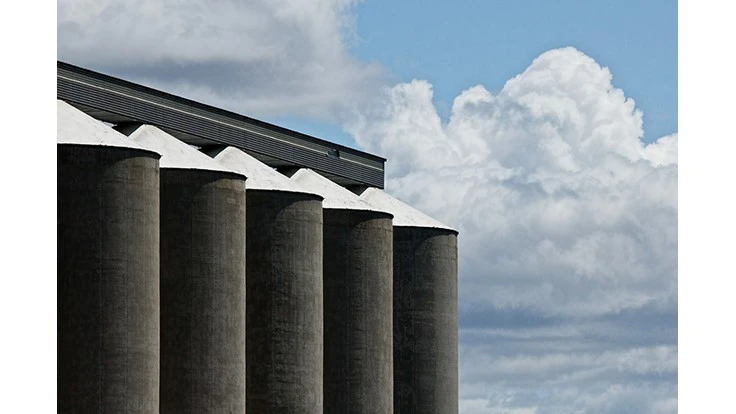
Among those affected by flooding in the Central and Southern Plains of the U.S. are farmers and their fields of crops grown or stored for human consumption. Although FDA recognizes that there are few, if any crops growing right now, crops that were previously harvested and stored in silos and other facilities may be impacted by flooding and might not be suitable for human consumption. The FDA Center for Food Safety and Applied Nutrition (CFSAN) has several resources to help growers who may be affected by the impacts to their crops from severe weather conditions.
The FDA’s Guidance for Industry: Evaluating the Safety of Flood-affected Food Crops for Human Consumption provides information for producers to assess potential damage to their food crops and assure the safety of flood-affected food crops for human consumption.
FDA reminds harvesters that generally, if the edible portion of a crop is exposed to contaminated flood waters, it is considered “adulterated” under the FD&C and should not enter the human food supply. This applies to all food crops including underground crops (e.g., peanuts, potatoes). For crops (e.g., pecans) that were in or near flooded areas but where flood waters did NOT contact the edible portions of the crops, the growers should evaluate the safety of the crops for human consumption on a case-by-case basis for possible food safety concerns.
Sometimes, crops that have been harvested, then deemed unsuitable for human use can be salvaged for animal food. For more information see CVM Update: Resources for Animal Food Producers in Flooded Areas.
The following can be contacted for reconditioning requests for contamination events occurring in
- Kansas, Nebraska, Missouri and Iowa: Victoria Wagoner, 913-495-5150, Victoria.Wagoner@fda.hhs.gov
- Minnesota, Wisconsin, South Dakota and North Dakota: Kristine Zuroski, 612-758-7120, Kristine.Zuroski@fda.hhs.gov
- Illinois and Michigan: DCB Kelli Wilkinson, 313-393-8120, Kelli.Wilkinson@fda.hhs.gov
- Louisiana, Tennessee, Mississippi, and Kentucky: Toni Williams, 513-679-2700 ext. 2160, Toniette.Williams@fda.hhs.gov
FDA encourages growers to work with state regulators and local FDA offices to assess their unique situations and take into consideration all possible types and routes of contamination from flood waters in determining whether a particular crop is adulterated.
For more information, also see Safety of Food Affected by Hurricanes, Flooding, and Power Outages
Latest from Quality Assurance & Food Safety
- Chef Robotics Introduces Pat-Down Capability for Meal Presentation and Sealing
- USDA Launches Regenerative Pilot Program
- Indoor Ag-Con Adds Food Safety Track to Conference Lineup
- IDFA Recognizes Federal Officials for Support of U.S. Dairy Industry
- Tetra Pak Acquires Bioreactors.net
- Fresh Del Monte Receives Rabobank Leadership Award
- São Paulo Earns Guinness World Record for Largest Municipal Food Security Program
- KPM Analytics Releases Ready-to-Use NIR Calibration Packages