Catharine Carlin/Cornell University
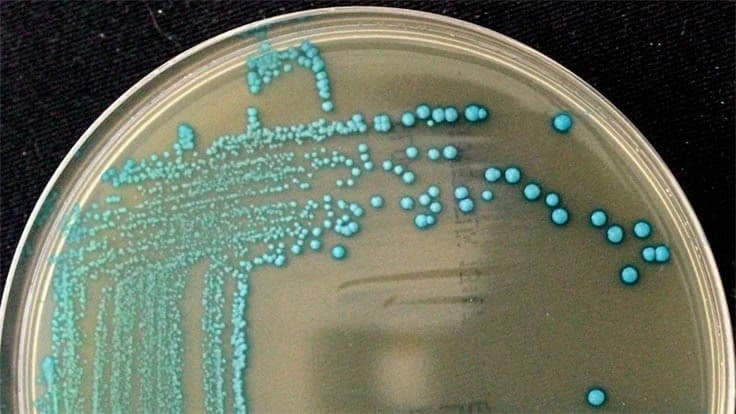
ITHACA, N.Y. — While examining the prevalence of listeria in agricultural soil throughout the United States, Cornell University food scientists have stumbled upon five previously unknown and novel relatives of the bacteria, according to new research published May 17 in the International Journal of Systematic and Evolutionary Microbiology.
The discovery, researchers said, will help food facilities identify potential growth niches that until now, may have been overlooked – thus improving food safety.
“This research increases the set of listeria species monitored in food production environments,” said lead author Catharine R. Carlin, a doctoral student in food science. “Expanding the knowledge base to understand the diversity of listeria will save the commercial food world confusion and errors, as well as prevent contamination, explain false positives and thwart foodborne outbreaks.”
One of the novel species, L. immobilis, lacked motility, or the ability to move. Listeria move a lot. Among scientists, motility was thought to be common among listeria closely related to L. monocytogenes, a well-known foodborne pathogen – and used as a key test in listeria detection methods. This discovery effectively calls for a rewrite of the standard identification protocols issued by food safety regulators, Carlin said.
“This paper describes some unique characteristics of listeria species that are closely related to listeria monocytogenes, which will be important from an evolutionary perspective and from a practical standpoint for the food industry,” said co-author Martin Wiedmann, the Gellert family professor in food safety and food science. “Likely, some tests will need to be re-evaluated.”
Understanding the different listeria species is key to comprehending their similarities. “This will help us to get better about identifying listeria monocytogenes,” Wiedmann said, “and not misidentifying it as something else.”
In the research, the Wiedmann group collected soil samples from all over the United States and agricultural water samples from New York state. From the soil and water, they found 27 listeria isolates that could not be classified to the species level, so the lab conducted whole-genome sequence-based tests and showed these new species formed five novel distinct clusters.
Since 2010, Wiedmann’s research group has discovered 13 of the 26 species classified in the genus listeria.
Latest from Quality Assurance & Food Safety
- Director General of IICA and Senior USDA Officials Meet to Advance Shared Agenda
- EFSA and FAO Sign Memorandum of Understanding
- Ben Miller Breaks Down Federal Cuts, State Bans and Traceability Delays
- Michigan Officials Warn Recalled ByHeart Infant Formula Remains on Store Shelves
- Puratos USA to Launch First Professional Chocolate Product with Cultured Cocoa
- National Restaurant Association Announces Federal Policy Priorities
- USDA Offloads Washington Buildings in Reorganization Effort
- IDFA Promotes Andrew Jerome to VP of Strategic Communications and Executive Director of Foundation