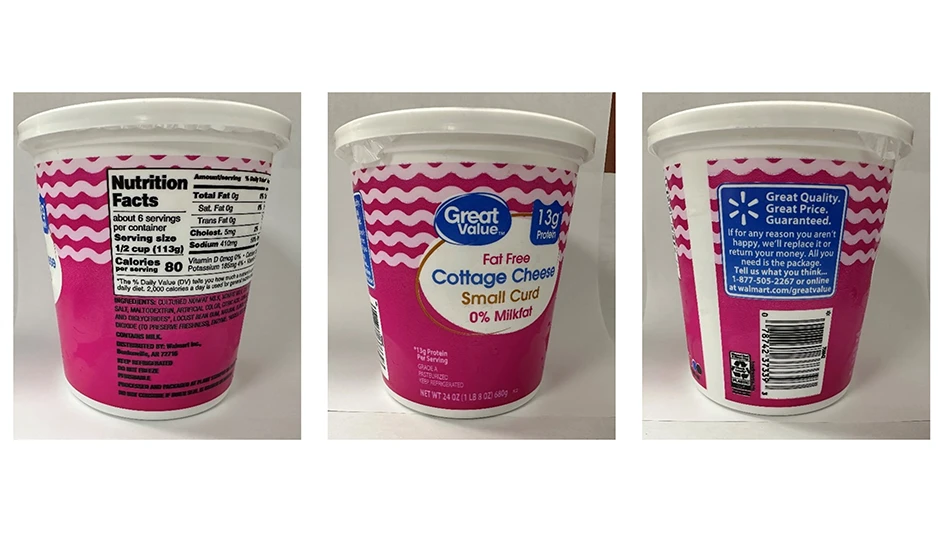
It would appear from the media coverage over the last few years that there has been an escalation of recalls and food safety failures within the United States. In fact, there has been an increase in recalls, but not necessarily due to illness reports, which have changed little in recent years, but often due to mislabeling, possible allergen concerns, or failing product requirements which are identified prior to any associated illnesses. Additionally, the vast majority of foodborne illnesses are local events, be they local restaurants, food vendors, small group gatherings, or home preparation.
Nevertheless, the U.S. food industry has experienced several large outbreaks. These outbreaks, affecting many individuals in multiple states are truly tragic results—most often affecting the very young and the elderly. When these sporadic outbreaks do occur, investigators are becoming more effective in isolating a single location or facility that sourced the outbreak. And, when a manufacturing facility is suspected as the source, usually five to 10 regulatory personnel will spend five to 25 days (25 to 200 total person days) inspecting and testing the facility until a final conclusion is reached.
After the fact, it often comes to light that the facility was inspected before. It may have been visited by a FDA inspector (often in excess of five years between visits) and/or a state inspector (perhaps once every year or two). In some cases, it may have been the USDA inspector on site, as is the case for most meat, poultry, and egg producers. But in almost all cases, the facility will have been visited by a third-party auditor—often multiple auditors per year for several days. So how can a facility be inspected and still have a failure?
Let’s start with the fact that food safety is hard work. Most food either comes with potential pathogens (such as Listeria monocyctogenes from the soil) or is easily contaminated from the environment (Salmonella from animals). Over many years, expanding knowledge and experience has allowed food producers to develop procedures and practices to make safer food. But the risk is there every day, and procedures and practices require human intervention and oversight—every hour, every day. Food producers bear the ultimate responsibility to carry out all of these requirements to bring safe food to market.
So what is the role and purpose of the inspectors, in particular the third-party auditors? To start with, they are independent reviewers of the food safety program. They look at standard programs for the food being processed and/or packaged. Is there a good and well-documented pest control program? Are standard operating procedures established for metal detectors? Is a robust environmental microbiological testing protocol in place? And are literally dozens upon dozens of other such programs in place? Then, the auditor will spot-check to verify that the program is actually being carried out on the processing floor as written and complies with industry standards and best practices. From these reviews and observations, a report is provided to the operator for use in program improvement, and/or the report is provided to potential or actual buyers of the food products coming from the facility.
The audit outlined above is a good overview of the operation, indicating opportunities for improvement, potential risk, and compliance to written programs. It can never represent the total knowledge and experience of the specific facility under review (to the extent known by the operator of the facility) and it cannot predict a future breakdown in following program procedures. In other words, it cannot guarantee. So if it is not a guarantee, what good is a third-party inspection? Why bother?
The answer is that it is a tool for food safety—one of many tools. But, over the past 60 years, it has proven to be an important tool in the battle to improve food safety in the U.S. and worldwide. Inspections and audits are tools that can identify weaknesses and trends within a facility that the management team can then use to modify and improve its food safety systems and training. Updated standards and schemes used to carry out the third-party audits will also incorporate best practices that have proven successful within food categories.
The reports can give insight to buyers of products from the facility on the general status of the facility’s food safety programs. The report would be part of the buyer’s program, which will usually also require Letters of Guarantee, microbiological lab reports, sample test results, and receiving inspection reports from their own warehouse, to name but a few of the buyer’s possible requirements.
So why don’t the FDA and state regulators handle all of this? The answer is scale and cost. There are more than 167,000 domestic facilities in the U.S., with another 254,000-plus facilities outside the U.S.—almost half a million total supplying food to the marketplace. There is no way we could afford to have government inspectors visit each of these facilities at least once per year.
Even retail buyers could not visit their tens of thousands of suppliers on an annual basis. Only with third-party auditors can this work be done, as part of a strong Buyer Approval Program.
All and all, while not a single-element guarantee, the approach of using third-party audits has added much to the current, and future, food safety status we enjoy in the U.S.
All of us involved in providing safe food know our work continues and is never done. Any loss of life or injury due to food poisoning is never acceptable. New research, new data, updated standards, and improved training are a continuing circle that we must travel persistently to reduce the risk of failure to its lowest level. This is what each and every food safety professional is committed to!
The author is President & CEO, AIB International.
Latest from Quality Assurance & Food Safety
- Director General of IICA and Senior USDA Officials Meet to Advance Shared Agenda
- EFSA and FAO Sign Memorandum of Understanding
- Ben Miller Breaks Down Federal Cuts, State Bans and Traceability Delays
- Michigan Officials Warn Recalled ByHeart Infant Formula Remains on Store Shelves
- Puratos USA to Launch First Professional Chocolate Product with Cultured Cocoa
- National Restaurant Association Announces Federal Policy Priorities
- USDA Offloads Washington Buildings in Reorganization Effort
- IDFA Promotes Andrew Jerome to VP of Strategic Communications and Executive Director of Foundation