At the root of the global supply chain, “it is difficult to ensure that suppliers in far-flung locations operate according to the high safety standards and tight quality control sought by U.S. consumers," states a July report from USDA's Economic Research Service. This carries through to consumer perception of import risk. "The consumer has a hair trigger reaction to imported foods," said David Acheson, managing director, food and import
safety at Leavitt Partners and former FDA associate commissioner for foods.
For any food, domestic or import, it is no longer acceptable for anyone along the chain to say their food is safe "because we’ve always done it this way and there’s never been a problem." Rather, “you have to prove to customers that it really is safe,” said Jorge Hernandez, senior vice president of food safety and quality assurance for U.S. Foodservice. In fact, the distributor has a 32-page Qual-ity & Food Safety Systems Expectation Manual for its suppliers and co-packers.
“When you look at the entire food chain, what has changed is the recog-nition that food safety is not a given,” Hernandez said. “Food safety is really a partnership.”
The Collaboration. The manual, which is updated every year or two to “move it to the next level,” stresses this partnership. “Our suppliers and co-pack-ers are considered to be an extension of our company, which mutually shares our business objectives and philosophies,” the manual states. “By meeting the expectations of this manual, we will reach our objective of providing safe, high-quality products that add value to our consumers and customers.”
It is just this sort of partnership and collaboration that is coming to the forefront of food safety all along the chain. Whether discussing the current state of imports at the root of the global supply chain; the needs of the processor for assessing one back and complying one forward; or the requirements of retail or foodservice distributors, it is a story of horizontal and vertical collaboration that is being seen as key.
Acheson cites the example of a traceability conference at which he recently spoke. The focus of the conference was on animal identification and tagging for tracking, but Acheson saw a much greater opportunity. As he told one participant with whom he was discussing a new swine identification technology, “Think beyond pigs. How could this transfer to other products?” The industry needs to see the benefits of technologies across all lines of food and “understand that there is a much bigger universe out there,” he said.
“The success here is looking at the big picture, connecting the dots, and making things collaborative.”
Processors themselves, as the center point of the chain between ingredient supply and distribution of end product, hold a collaborative liaison role between the two. The processor’s challenge in the chain, said IQS Senior Consultant Laura Weisensell, “is to make sure that quality standards are being communicated correctly and clearly to our suppliers and that our customers are communicating clearly and accurately to us.”
And within the plant itself, cross-departmental collaboration is necessary in reviewing contracts and specifications of customers and for suppliers. Besides involving the purchasing department, she said, it is critical to have a technical person who completely understands the specifications and a quality person who will be setting up incoming inspections and ensuring customer specifications are followed on the floor.
Imported Goods. Incoming goods inspections are essential no matter the supply or supplier, but because the regulations are not standard between countries, and U.S. import inspection resources are limited, imported goods hold a higher risk, increasing the need for thorough incoming inspections.
The challenge arises not only from the “far-flung” distance of suppliers, but also from the lack of standardized regulations for imported and domestic foods. “The FDA and USDA have very different approaches in terms of food safety,” Acheson said. With a much tighter sys-tem than FDA, USDA holds imports to requirements of equivalence, that is, the USDA has a better system to ensure the same standards are held for imports as are required for U.S-produced food. However, USDA also has a simpler job with fewer food commodities, number of countries from which foods can be imported and number of ports through which the imports can come.
FDA has no such limits, Acheson said. “Anyone can import anything through any port in the U.S.," and there are more than 300. To comply with the Bioterrorism Act of 2002, the supplier does have to be registered with FDA, but this provides only “one back” information of location and who and how to contact if there is a problem, he said. “There is nothing to address if the product is safe, just where it was shipped from.”
To illustrate this, Acheson gave the example of a chocolate bar imported from Mexico. The ingredients for that bar may have been sourced from other countries, he said, “But the only information the FDA would have is that it's man-ufactured in Mexico, not that the ingredients are from Brazil, Vietnam, China and Mexico. There are no requirements for that.” Even if a product were manu-factured in China, if it were exported to Mexico, then the U.S., the current system of registration and Prior Notice only has to go back to Mexico.
*****
IMPORT FACTS:
FACT: Between 1998 and 2007, U.S. food imports grew from $41 billion to nearly $78 billion.
FACT: Food imports from China more than tripled between 2001 and 2008.
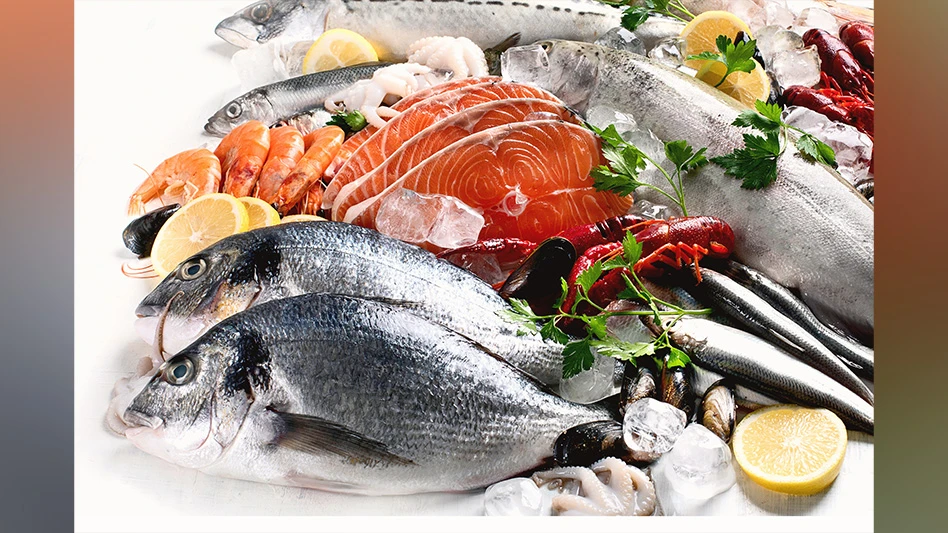
FACT: More than 80 percent of the seafood consumed in the United States is imported.
*****
Traceback. Because of this, it is expedient for processors to trace further back than the Act requires, to know suppliers’ suppliers and the standards by which they operate. Referring to the PCA peanut-product recall, Acheson recommended that processors know the layers back and know they can act immediately if a product comes into question.
“It comes back to the same issues—if you know where it’s coming from, what do you know about the preventive controls in that facility?” he said. “It behooves the industry to have as much information as it can about the pedigree of a product.”
In addition, FDA simply does not have the capability to inspect all incom-ing foods under its jurisdiction. There are more than 200,000 foreign facilities in more than 150 countries that are registered to import food product into the U.S., Acheson said. One-third of these are processing facilities; the others are distribution or warehouse facilities. FDA had been inspecting about 100 incom-ing shipments per year; this year that number was to be raised to 200; in 2010 to 600; and by 2011 to 1,000. While that is a ten-fold increase, it is still a “tiny, tiny fraction” of incoming food.
By law, products must be produced according to safety standards to be brought into the U.S., Acheson said. “The question is, how do you ensure that? That’s the point where the government needs to take a more active role.”
Acheson cited seafood as an example. The controls in the U.S. for aquacultured seafood are high, but 80 percent of U.S. seafood is imported. In 2007, the U.S. put out an import alert for five types of seafood from China because of antimicrobial contamination. The difficulty is that this can result from many factors including feed and environment—where overcrowding for maximum yield can result in fungicidal contamination. Those factors need to be controlled, he said, but how? “At what point should control be exerted? The U.S. government now holds almost no capacity to be able to get out there and check up.”
As a result, Acheson said, “It falls heavily on the importer to ensure the products they’re importing are safe. The burden is on whomever is importing.” Often, this means the more familiar the brand, the greater the burden. If there is a problem, “it won’t be Jose’s Farm in the media, it will be [the name brand],” he said.
It is for such reasons that the industry has tend-ed to self-police and the private sector to set up its own systems and requirements to ensure standards are met.
In the next issue of QA, we will discuss the next steps in the chain with a focus on private sector standards and the cost of non-conformance.
*****
THREE THOUGHTS FOR FEDERAL INVOLVEMENT
With the current focus on food safety, controversy flows as to the extent of control the government should hold and the impact of current bills on small business.Former FDA Associate Commissioner for Foods David Acheson believes the role of government should be to “establish standards that are clear and mechanisms to follow up,” and sees three possible ways of getting there:
- Increase FDA inspections. However, he said, the ability for FDA to inspect even a high percentage of imports or importing firms is still a long way off.
- Identify foreign governments which have comparable food safety standards (e.g., Canada) and ease inspections on those to apply resources to areas of higher risk. Establish a protocol to determine the level of compliance, and set the bar there. The standard for inclusion has to be very specific and transparent, Acheson added, “because everyone who is out will cry, ‘Foul!’.”
- Build confidence in third-party auditors through federal certification. Although some auditing companies and auditors are very good, some are not, he said. “It is not a level playing field.” In addition, Acheson said, the companies are hired to conduct the inspection and want to continue to work with the customer, so may hesitate to give a negative report. “It breeds that conflict of interest.”
How do you control that? “Through a great deal of transparency and federal oversight,” he said. House bill 2749 includes specific language about what third-party certifiers would need to be. From that, Acheson said, the government could create a Website on which those who have met approval are listed.
*****
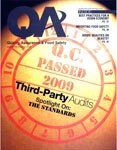
Explore the November 2009 Issue
Check out more from this issue and find your next story to read.
Latest from Quality Assurance & Food Safety
- FDA Releases Produce Regulatory Program Standards
- Invest in People or Risk the System: Darin Detwiler and Catalyst Food Leaders on Building Real Food Safety Culture
- USDA Proposes Increasing Poultry, Pork Line Speeds
- FDA Releases New Traceability Rule Guidance
- TraceGains and iFoodDS Extend Strategic Alliance
- bioMérieux Launches New Platform for Spoiler Risk Management
- SafetyChain Receives SOC 2 Type 2 Certification
- Puratos Acquires Pennsylvania-Based Vör Foods