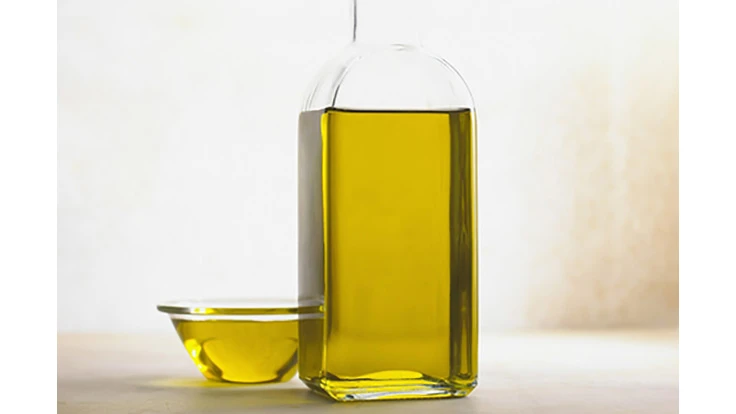
Purifying water and greening nanotechnology could be as simple as shaking a vial of water and oil. At least that’s the case for a new method to clean contaminated water full of unwanted nanomaterials.
Nano implies small, and the technology is great in medical devices, beauty products, smartphones, and foods—but it’s also a problem. The tiny nanoparticles, nanowires, nanotubes and other nanomaterials that make up our technology eventually find their way into water. The Environmental Protection Agency says more 1,300 commercial products use some kind of nanomaterial. And we just don’t know the full impact on health and the environment.
“These materials are very, very tiny and that means if you try to remove them and clean them out of contaminated water, that it’s quite difficult,” says Dongyan Zhang, a research scientist at Michigan Technological University. She adds that techniques like filter paper or meshes often don’t work.
Instead, shaking up oil and water traps the nanomaterials, which can be easily removed. The process clears out nearly 100 percent of nanowires, nanosheets, nanotubes and other one- and two-dimensional nanomaterials. Only zero-dimensional nanospheres are still too small to grab.
Latest from Quality Assurance & Food Safety
- FSIS Extends Comment Period on Strategies to Reduce Salmonella in Poultry Products
- PTNPA 'Nut Numbers' Report Reveals Economic Impact
- Mettler-Toledo Launches New Product Inspection eGuide for Meat, Poultry and Seafood
- USDA Offers Tips to Keep Food Safety in Play this Super Bowl
- FoodChain ID Acquires Sbcert
- Florida Releases Candy Testing Results Under Healthy Florida First Initiative
- Penn State Extension Offers Webinar on Food Safety for Volunteers
- Brian Ronholm of Consumer Reports Reflects on Food Policy Lessons from Capitol Hill